Construction Safety Training in Massachusetts
21
Aug
Massachusetts employers need more than a general safety briefing when crews operate cranes, hoisting equipment, or work around fall and rigging hazards. Training must address the hazards workers actually face and the state rules that apply to their work.
Call 508-212-4735 to enroll today.
Construction safety training should combine OSHA requirements with Massachusetts-specific hoisting guidance. OSHA-10 may be required for employees of private contractors on qualifying public construction projects. But it does not replace training required by specific OSHA standards, including rules for crane operation, fall protection, and rigging.
For employers, the practical starting point is understanding why these requirements matter, then matching each operator's responsibilities to the right training, evaluation, and licensing pathway.
Why Construction Safety Training Matters for Massachusetts Employers
A safe jobsite depends on more than having rules posted in the trailer. Employers need workers who can recognize hazards, select the right controls, and use equipment according to both the work plan and applicable requirements. That is why construction safety training should be treated as an operating standard, not a one-time orientation.
Falls show the consequences of leaving that preparation to chance. OSHA reports that construction recorded 991 worker deaths in 2016, and falls accounted for 38.7 percent of those fatalities. Fall hazards remain a serious concern for Massachusetts construction workers as well, as documented by the CDC's report on fatal falls among Massachusetts construction workers. Training helps crews identify unprotected edges, openings, ladders, elevated work areas, and changing site conditions before those hazards become incidents. It also gives supervisors a common language for correcting unsafe practices in the field.
Employers also carry responsibility for the people and equipment under their direction. A worker who has not been properly trained may not understand load limits, exclusion zones, signaling, rigging conditions, or the limits of a machine. If an incident occurs, incomplete training records or unclear instructions can make the employer's response more difficult. A documented program does not eliminate risk or guarantee a particular outcome. But it demonstrates that the company took practical steps to prepare its workforce and manage known hazards.
The financial impact of an injury extends beyond immediate medical expenses. A serious event can interrupt a project, require replacement labor, damage equipment, consume management time, and affect future bidding or client relationships. Even when no injury occurs, a preventable near miss can expose weaknesses in supervision and work planning. Regular training, refreshers, and job-specific discussions help managers find those weaknesses while they can still be corrected. They also keep expectations consistent when crews change, subcontractors join the site, or the sequence of work creates new exposures.
Compliance is another reason to build training into the company's normal process. Massachusetts requires private contractors to ensure employees on public construction projects valued at $10,000 or more complete OSHA-10 training. While the state's Department of Labor Standards explains that it does not require OSHA-10 for public-sector employees. OSHA-10 also does not replace training required by specific OSHA standards. Employers should therefore match instruction to the actual hazards and equipment involved, retain accurate records. And verify that operators meet any separate licensing, certification, and evaluation requirements before assignment.
What OSHA Construction Safety Training Does Your Crew Need?
Start by separating the training your Massachusetts project requires from the training that helps your crew recognize and control hazards every day. OSHA-10 is a foundational course for many workers, while OSHA-30 is intended for supervisors and others with greater responsibility for site safety. Neither course, by itself, replaces the operator qualifications or task-specific instruction required for the work being performed.
For private contractors working on Massachusetts public construction projects valued at $10,000 or more. The Department of Labor Standards says the contractor must ensure that all employees complete OSHA-10 training. The same clarification states that DLS does not require OSHA-10 training for public-sector employees. Contract terms, an owner requirement, or another applicable rule may still call for training, so review the project requirements before mobilizing the crew. Read the Massachusetts DLS clarification.
OSHA-10 and OSHA-30 serve different roles
OSHA-10 gives workers broad awareness of common construction hazards, including falls, struck-by incidents, caught-in hazards, electrical risks, and basic personal protective equipment practices. It is a useful baseline for employees who need to understand how hazards are identified and reported on a jobsite.
OSHA-30 goes deeper and is generally selected for foremen, supervisors, competent persons, and workers who help coordinate safety practices. The longer course allows more time for hazard control, supervisory responsibilities, and topics relevant to the employer's operations. Choose the course by role and responsibility, not simply by selecting the longest option for everyone.
The General Duty Clause does not replace hazard-specific training
Section 5(a)(1) of the Occupational Safety and Health Act, commonly called the General Duty Clause. Requires employers to provide a workplace free from recognized hazards likely to cause death or serious physical harm. In practice, that means a completion card is not a substitute for a site-specific safety program. Employers still need to identify the hazards present, provide suitable instruction and equipment, and enforce safe procedures.
Massachusetts DLS also makes this distinction clear: OSHA-10 does not replace training required by specific OSHA standards. A worker operating covered equipment may need separate qualification, evaluation, or certification. Fall protection, rigging, excavation, lockout procedures, and other duties may require instruction tailored to the task and standard. OSHA's General Duty Clause guidance provides the federal framework, but employers must apply it to actual jobsite conditions.
For crews working around construction equipment, the CEASE construction equipment safety course can complement OSHA awareness training with practical equipment and jobsite safety instruction. Keep records of course completion, task-specific qualifications, evaluations, and refresher training so supervisors can confirm that each employee is prepared for the work assigned.
Crane and Hoisting Certification: OSHA 1926.1427 and Massachusetts Licenses
Crane operation requires more than general jobsite awareness. Under OSHA 1926.1427, an employer must ensure that each operator of a covered crane or derrick is trained, certified or licensed, and evaluated before operating the equipment. An operator-in-training may operate only under the direct supervision required by the standard. So placing an inexperienced worker in the seat without qualified oversight is not a substitute for completed certification.
That federal requirement is one part of a Massachusetts compliance plan. The state hoisting license process applies its own eligibility and examination requirements. According to the Massachusetts hoisting licensing and exams guidance, applicants must be at least 18 years old, submit an application, and pass an examination. The exam covers the working parts of hoisting machinery, safe operating practices, hand signals, and inspection procedures. Massachusetts licenses are renewed every two years.
These requirements serve different purposes, even when they appear in the same training conversation. OSHA focuses on whether the employer has confirmed the operator's training, certification or license, and practical evaluation for covered crane work. Massachusetts licensing verifies that an applicant has met the state's process and demonstrated knowledge of hoisting equipment and safe operation. A general orientation or basic construction safety training course should not be represented as a replacement for either obligation. Employers should map the course plan to the worker's actual duties, equipment, and license needs before scheduling work. That review can also identify gaps in refresher training, documentation, or supervisor knowledge before they affect production.
What employers should verify before assigning crane work
Before an operator begins covered work, confirm which equipment and duties are involved. Identify the applicable OSHA requirements, and check the worker's Massachusetts license status when state licensing applies. Keep records of the training, certification or license, and evaluation process. Supervisors should also know the boundaries of any operator-in-training arrangement, including who is providing supervision and how that supervision will be maintained during the work.
Operators can review Massachusetts licensing pathways and available preparation options through the MA Hoisting License overview. For a company, the practical goal is alignment: the right license classification, documented evaluation, current knowledge of signals and inspections, and procedures that match the equipment being used. That approach makes the training plan useful on the job, not merely complete on paper.
Business Owner Note: You can schedule group training for your crew, including an on-site format that helps keep instruction aligned with your equipment and worksite needs.
Fall Protection and Rigging Standards Your Operators Must Master
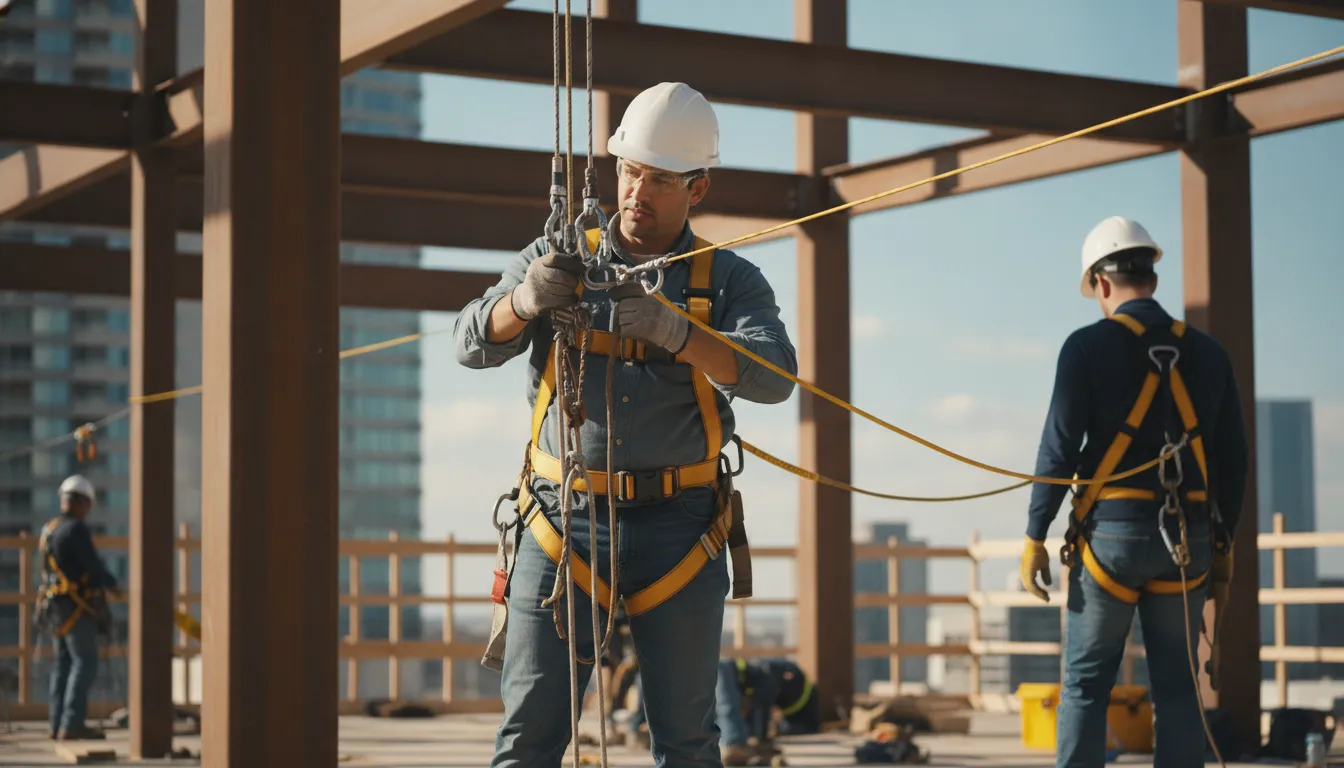
Fall protection starts with recognizing where a worker can fall, what equipment or edge creates the exposure, and which control is appropriate before work begins. Under OSHA 1926.501, employers in construction must provide fall protection when employees face covered fall hazards, including many situations at six feet or more above a lower level. That duty is not satisfied by handing workers basic safety materials. Supervisors must plan the task, install or verify required guards, and confirm that operators understand how to work around exposed edges and elevated equipment.
Practical fall protection training helps crews connect the rule to the conditions they see on a Massachusetts jobsite.
Recognize the hazard before positioning equipment
Before a lift or elevated task, inspect the work area for unprotected sides, floor openings. Leading edges, roof openings, scaffolds, and access points that could place a person below the required protection threshold. Guards and other protective systems must be in place before operators or ground personnel are exposed. A guardrail that is missing, damaged, or removed for access is a change in site conditions, not a minor housekeeping issue. Stop, report the condition, and follow the employer's procedure for correcting it.
Equipment positioning also matters. A machine placed too close to an excavation, edge, or opening can create a fall or struck-by exposure even when the operator remains inside the cab. Operators should identify travel paths, spotter locations, overhead obstructions, and areas where workers may enter the swing or loading zone. Clear communication with the site supervisor keeps the lift plan aligned with current conditions.
Inspect rigging and use it within its limits
Rigging for material handling must be inspected before use and whenever conditions could affect its safety. OSHA 1926.251 addresses the use and inspection of slings, hooks, wire rope, chains, and other rigging equipment. Look for cuts, broken wires, stretched links, heat damage, chemical damage, distorted hooks, missing identification, or other defects. Remove damaged equipment from service. Never improvise with makeshift connections, exceed the marked capacity, or use a sling in a configuration the crew has not evaluated.
Safe rigging also requires selecting equipment for the load and lift, protecting slings from sharp edges, securing the load, and keeping employees clear of suspended materials. The signal person, operator, and riggers need a shared understanding of hand signals and communication procedures. A pre-lift inspection should confirm the load weight when known, attachment points, balance, landing area, and exclusion zone. If the load shifts, the rigging changes, or communication is lost, stop the lift and reassess rather than trying to correct the problem while suspended.
OSHA-10 can provide general awareness, but it does not replace training required by specific OSHA standards. Employers should document role-specific instruction, inspections, corrections, and follow-up so that construction safety training becomes a daily control, not a one-time checkbox.
OSHA Training vs. Massachusetts Hoisting License: What Employers Need
OSHA courses and a Massachusetts hoisting engineer license address different compliance needs. OSHA-10 and OSHA-30 build general workplace awareness and supervisory knowledge. The state license verifies that an operator understands the machinery and practices required to operate covered equipment in Massachusetts. Treating one as a substitute for the other can leave a crew trained in general hazards but unprepared for equipment-specific licensing requirements.
How OSHA training compares with a Massachusetts hoisting license| Training | Audience | Scope | Massachusetts relevance |
|---|
| OSHA-10 | Entry-level construction workers and other employees who need basic site safety awareness | Recognizes common hazards, safe work practices, and worker responsibilities. It is an awareness course, not an equipment operator license. | Private contractors on Massachusetts public construction projects valued at $10,000 or more must ensure employees complete OSHA-10. DLS does not require OSHA-10 for public-sector employees. Read the Massachusetts DLS clarification. |
| OSHA-30 | Supervisors, forepersons, safety coordinators, and workers with broader safety responsibilities | Provides more extensive hazard and prevention education than OSHA-10. It supports a stronger site-safety foundation but does not itself grant a Massachusetts hoisting license. | Useful for managing construction safety training and hazard controls, but employers still need to address any separate state licensing and OSHA standard requirements that apply to the work. |
| Massachusetts hoisting engineer license | Individuals who operate covered hoisting machinery in Massachusetts | Operator-focused certification. Applicants must be at least 18 and pass an exam covering machinery parts, safe operating practices, hand signals, and inspection procedures. | The license is renewed every two years and addresses the state-specific authorization to operate covered equipment. Review the Massachusetts hoisting licensing and exams requirements. |
For employers, the practical approach is to assign training by job responsibility. New or entry-level workers may need OSHA-10 for baseline awareness. Supervisors who direct crews, coordinate hazards, or oversee safety may benefit from OSHA-30. An employee operating covered hoisting machinery needs the appropriate Massachusetts license, regardless of which OSHA course they completed.
The distinction matters because OSHA-10 does not replace training required by specific OSHA standards. OSHA also requires covered crane operators to be trained, certified or licensed, and evaluated under its operator provisions. Employers should confirm the machinery, project type, contract requirements, and employee duties before scheduling courses.
Keep the training records organized by employee and role. A supervisor's OSHA-30 card, a worker's OSHA-10 card, and an operator's state license answer different questions during an internal review or project kickoff. Reviewing those records when assignments change also helps prevent a worker from being placed on equipment before the required authorization is confirmed.
Use the Massachusetts hoisting license overview to identify the licensing path for operators, then coordinate it with broader site safety training. That layered plan gives managers a clearer record of general safety education and equipment-specific authorization without presenting either credential as a universal substitute.
How Trained, Licensed Operators Reduce Jobsite Risk and Liability
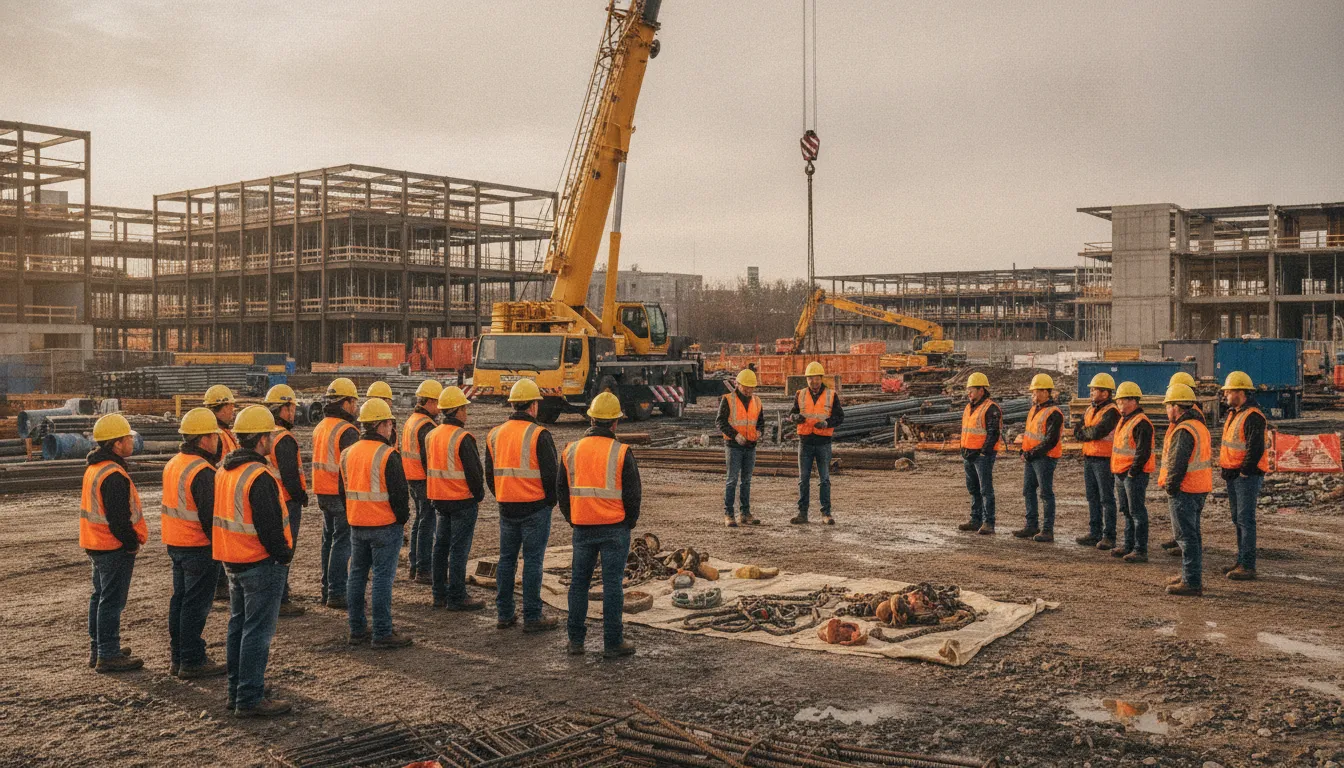
A trained operator does more than move equipment from one point to another. The operator recognizes changing ground conditions, confirms that the work area is controlled. Communicates with spotters and signal persons, and stops when a lift or excavation plan is no longer safe. That judgment protects coworkers, the public, equipment, and the schedule. For Massachusetts construction companies, it also supports a defensible safety program built on documented qualifications and consistent procedures.
OSHA and Massachusetts hoisting licensing address related but different responsibilities. OSHA requires covered crane operators to receive training, certification, and evaluation under its operator standard. A Massachusetts hoisting license addresses state requirements for operating regulated hoisting machinery. Treating one credential as a substitute for the other can leave a company with an avoidable compliance gap. Employers should match each employee's duties and equipment to the applicable OSHA standards, Massachusetts licensing rules, and site-specific hazards.
That distinction matters during inspections and after an incident. Massachusetts private contractors working on public construction projects valued at $10,000 or more must ensure that all employees complete OSHA-10 training. At the same time, OSHA-10 does not replace training required by specific standards, including instruction tied to equipment operation, fall protection, or other recognized hazards. A current license, training record, operator evaluation, and site orientation give supervisors evidence that the company took reasonable steps to prepare its workforce. They also make it easier to identify gaps before an inspector, general contractor, or incident investigation does.
Better preparation can reduce operational exposure even when no citation occurs. Operators who understand inspection routines and communication protocols are more likely to catch damaged equipment, unclear signals, unstable surfaces, or unauthorized use before work proceeds. Fewer near misses can mean less downtime, less property damage, and fewer disruptions to project delivery. Strong records may also help a company explain its risk controls to insurers and contracting partners, although coverage decisions always depend on the policy and carrier.
The most useful program is documented and repeatable. Keep licenses, certificates, evaluations, refresher training, equipment inspections, toolbox talks, and corrective actions organized by employee and project. Review the records when assignments change, new machinery arrives, or a near miss reveals a weakness. For companies that need consistent instruction across a crew, on-site training can bring the course to the job location and reduce scheduling friction. The result is not paperwork for its own sake. It is a clear process for proving who is qualified, what each operator has been taught, and how the company manages jobsite risk.
How to Set Up Construction Safety Training for Your Massachusetts Crew
A workable training plan starts with the jobs your employees perform, the equipment they operate, and the requirements attached to each project. Use the following sequence to build a program that supports safe work and keeps license and course records organized.
- Assess roles and license classifications. List each operator, the machines they use, the work they perform, and whether they need an initial Massachusetts hoisting license, a classification upgrade, or a renewal. Do not assume that a general safety card covers equipment-specific duties. OSHA requires covered crane operators to be trained, certified, and evaluated under the applicable requirements, while Massachusetts licensing has its own state process. Compare each role with the current hoisting license classes and identify employees who should not operate equipment until their requirements are met.
- Map OSHA-10, OSHA-30, and hazard-specific needs. Confirm the project type, contract requirements, and employer expectations before assigning courses. For Massachusetts private contractors, every employee on a public construction project valued at $10,000 or more must complete OSHA-10 training. That rule does not mean OSHA-10 replaces training required by specific OSHA standards, and Massachusetts DLS does not require OSHA-10 for public-sector employees. Document the difference, then add the instruction your hazards require, such as fall protection, rigging, equipment operation, and site-specific orientation. A broader supervisor curriculum may make OSHA-30 appropriate for selected leaders, but it should not substitute for a required hoisting license or task qualification.
- Choose the delivery format that fits the crew. Self-paced online training can help employees with changing shifts or limited travel options. Classroom instruction may be a better fit when operators need a scheduled learning environment and direct access to an instructor. For multiple employees, ask about on-site group training so instruction can be coordinated around your workforce and location. Spanish-language options can help ensure employees understand safety procedures and course material. Review the course scope, classification fit, instructor support, and the available success guarantee before enrolling.
- Schedule around jobsite limits. Build the training calendar before a busy project phase begins. Account for shift changes, delivery windows, weather contingencies, travel time, and the equipment coverage needed while operators are away. Give supervisors a clear cutoff for enrollment and arrange qualified coverage so no one feels pressured to skip required instruction. For on-site training, confirm the address, room, attendance list, language needs, and any equipment or site conditions the instructor should know in advance.
- Document compliance and maintain the record. Keep certificates, license information, evaluation results, attendance, course dates, renewal reminders, and any supplemental hazard training in one accessible employee file. Match each record to the operator's role and project rather than storing certificates without context. Review the file before assigning work, after a classification change, and ahead of renewal deadlines. A simple spreadsheet or HR system can flag missing documents, but supervisors should still verify that the person is trained and authorized for the specific equipment and task.
Business Owner Note: If several employees need coordinated instruction, request training at your location and plan the session around your crew's operating schedule.
Call 508-212-4735 to enroll your crew today.
Frequently Asked Questions
Are there specific construction safety training requirements in Massachusetts?
Yes. Private contractors working on Massachusetts public construction projects valued at $10,000 or more must ensure that all employees complete OSHA-10 training. The Massachusetts Department of Labor Standards also states that it does not require OSHA-10 for public-sector employees, so employers should distinguish the project and workforce involved. Review the Massachusetts DLS clarification for the applicable rule.
Does OSHA-10 replace crane, hoisting, fall protection, or rigging training?
No. OSHA-10 provides foundational hazard awareness, but it does not replace training required by specific OSHA standards. Employees who operate covered cranes must be trained, certified, and evaluated under OSHA 1926.1427. Fall protection and rigging instruction should address the hazards and equipment used on your jobsite. Read OSHA's crane operator requirements.
What topics should a Massachusetts construction safety training plan cover?
Start with the hazards your crew actually encounters. A practical plan may include hazard recognition, fall protection, equipment operation, crane and hoisting procedures, rigging practices, hand signals, inspections, and emergency response. Match the instruction to each worker's duties, equipment, and level of responsibility instead of treating one general course as a complete compliance program.
How often do construction workers need safety training?
There is no single refresher interval that covers every construction hazard or role. Provide training before an employee performs unfamiliar work or operates equipment, when workplace conditions or equipment change, and whenever observation shows that a worker needs additional instruction. Keep records of the topics covered, attendees, instructor, and any required evaluation so supervisors can verify readiness.
Ready to Set Up Training for Your Crew?
Practical construction safety training can help your Massachusetts crew build a clearer process for hoisting, fall protection, rigging, and related jobsite responsibilities. Choose the format that fits your operators, whether you need classroom instruction or coordinated group training for your team.
Call 508-212-4735 to enroll and schedule training.
Tags: ,