Crane Operator Salary in Massachusetts: 2026 Outlook
17
Aug
Crane work in Massachusetts can offer strong earning potential, but the number on a job posting depends on experience. Location, project type, and the license or certifications required for the equipment. For a realistic starting point, compare statewide wage data with the qualifications employers expect.
Call 508-212-4735 to discuss your hoisting test preparation.
According to the U.S. Department of Labor's CareerOneStop Salary Finder, Massachusetts crane and tower operators reported 2025 wages of about $59,860 at the low end. $98,150 at the median, and $129,790 at the high end, or approximately $28.78, $47.19, and $62.40 per hour. Your actual crane operator salary may vary based on seniority, union or non-union employment, and the region where you work.
Those figures provide useful context, but they do not tell the whole story. The next step is to compare Massachusetts wages with national benchmarks and understand what the 2026 market numbers really mean for an operator planning a career.
What Is the Crane Operator Salary in Massachusetts in 2026?
If you are comparing crane careers or planning your next license step, the Massachusetts market is worth examining separately from national averages. The latest CareerOneStop Salary Finder data for Massachusetts crane and tower operators, based on 2025 estimates, lists an annual low wage of $59,860, a median of $98,150, and a high of $129,790. Those figures correspond to hourly wages of $28.78, $47.19, and $62.40.
That makes the typical Massachusetts crane operator salary substantially higher than the national average reported by the U.S. Bureau of Labor Statistics. The comparison is useful, but it is not a promise of what any individual job will pay. Classification, experience, employer, location, project type, and schedule can all affect an offer.
How Massachusetts pay compares with national data
For context, BLS Occupational Employment and Wage Statistics data for May 2023 reports a national mean wage of $68,040 per year, or $32.71 per hour, for crane and tower operators. The national 10th percentile was $39,200 annually, while the 90th percentile was $98,820. In other words, the Massachusetts median of $98,150 is close to the national 90th-percentile figure, although the datasets use different geographic scopes and reference periods.
Use these numbers as a market benchmark rather than a guaranteed starting salary. A new operator may enter below the state median while building hours, equipment experience, and a record of safe performance. An experienced operator working on larger or more technically demanding projects may compete for roles closer to the upper end of the state range.
What the salary figures mean for your career plan
The headline number matters, but so does the path required to qualify for the work. Massachusetts law requires operators of mechanical hoisting machinery, including covered crane equipment, to hold a license or temporary permit issued under the state's hoisting law. The Division of Occupational Licensure classifies hoisting machinery by category, so the correct license path depends on the equipment and duties involved. Review the requirements in Massachusetts General Laws Chapter 146, Section 53 before choosing training.
For the underlying wage references, see the CareerOneStop Salary Finder and the BLS crane and tower operator wage table. Together. They show why a Massachusetts crane operator salary can look different from a national average and why the next sections should be read through the lens of experience. Union status, region, and licensing.
How Experience Drives a Crane Operator Salary in Massachusetts
Experience changes more than a job title. It can affect the equipment you are trusted to operate, the classifications you hold, the projects you qualify for, and the consistency of your work history. Those factors help explain why a crane operator salary in Massachusetts can vary widely from one operator to another.
Massachusetts salary estimates show a practical progression. Entry-level crane operators may earn about $54,000 per year. Mid-level operators may reach roughly $77,000, while senior operators can earn as much as $119,000. Top earners may reach approximately $146,000, depending on their classification, employer, workload, and project opportunities. These figures are estimates, not guaranteed wages or a promise of what any individual position will pay.
Entry-level operators build value through safe, consistent work
New operators typically have fewer classifications and less field time. Their first priority is developing reliable operating habits, understanding site procedures, and building a safety record that supervisors can trust. The starting point can be lower than the Massachusetts figures listed above, especially when an operator is still gaining experience or working on less complex equipment.
A national experience comparison from CareerExplorer illustrates the general pattern, but it should not be treated as Massachusetts-specific. Its Illinois data places starting wages near $35,460, junior wages around $41,170, mid-level wages near $51,010, senior wages around $64,630, and top wages near $81,190. Local demand, collective bargaining, overtime, licensing, and project type can produce very different results in Massachusetts. Review the CareerExplorer experience bands as a relative career pattern only.
More classifications and hours can expand earning potential
As operators gain documented hours and qualify for additional equipment categories, they may be considered for a wider range of assignments. Overtime, difficult schedules, shutdown work, and specialized construction projects can also increase total annual earnings. However, higher pay usually comes with greater responsibility. Employers look for operators who follow procedures, communicate clearly with ground crews, protect people and property, and maintain a dependable safety record.
Massachusetts law requires operators of mechanical hoisting machinery, including cranes, to hold the appropriate license issued through the Division of Occupational Licensure. The law also provides for machinery classifications that include cranes and similar equipment. Read the Massachusetts hoisting license statute before choosing a training path.
If you are ready to build toward higher-level work, an online 1B hoisting test preparation online course can help you prepare for the requirements associated with your next step. Training does not guarantee a particular salary, but the right license, broader qualifications, field hours, and safe performance can put you in a stronger position when better opportunities become available.
Union vs Non-Union: Which Crane Jobs Pay More in Massachusetts?
Union and non-union crane jobs can both provide a solid career path, but the way compensation is structured may differ substantially. Union employers generally follow negotiated wage agreements that set pay scales, overtime rules, benefit contributions, and other employment terms. As a result, a union position may offer a higher base wage and a more clearly defined benefits package than a comparable non-union role.
That does not mean every union job pays more than every non-union job. A non-union employer may offer competitive pay to attract an experienced operator, especially for difficult work, specialized equipment, night shifts, travel, or a tight labor market. Your total compensation depends on the employer, crane classification, location, experience, project schedule, overtime, and the value of health, retirement, and other benefits.
How negotiated wages affect your total compensation
When you compare offers, look beyond the hourly number. A union wage agreement may separate the base wage from employer-paid fringe benefits. Those benefits can include health coverage, retirement contributions, training funds, and other negotiated items. A non-union offer may place more of the compensation in the hourly rate, or it may provide benefits through a different structure. Ask for a written breakdown so you can compare the full package on equal terms.
Also confirm how overtime, per diem, travel time, shift premiums, and equipment responsibilities are handled. Two jobs with similar advertised rates can produce different annual earnings when their schedules and benefit costs are different. These comparisons help explain why published crane operator salary figures should be treated as general market guidance rather than a promise of what any one operator will earn.
What Davis-Bacon means on federally funded projects
Federally funded construction projects introduce another important pay rule. The Davis-Bacon Act requires covered projects to follow wage determinations that establish minimum compensation by trade classification and geographic area. The required amount generally includes a base wage plus fringe benefits. Massachusetts has roughly two dozen active Davis-Bacon wage determinations, so the applicable minimum can depend on the county, project type, and classification used for the work.
A Davis-Bacon minimum is a legal floor, not necessarily the final rate an experienced operator will receive. Employers may pay more to secure qualified workers, and a collective bargaining agreement may establish terms above that minimum. Before accepting a covered project, review the wage determination and confirm that the crane classification matches the work you will perform.
Whichever employment model you pursue, Massachusetts requires operators of mechanical hoisting machinery, including cranes, to hold the appropriate state license or permit under Massachusetts General Laws Chapter 146, Section 53. Licensing and documented qualifications can strengthen your position when comparing union and non-union opportunities.
Crane Operator Pay by Region in Massachusetts
Where you work can affect your earning range as much as your experience, equipment classification, and employer. The 2025 CareerOneStop Salary Finder, a U.S. Department of Labor resource, reports meaningful differences among Massachusetts-area labor markets. These figures are annual wage estimates for crane and tower operators, not guaranteed offers for a specific job.
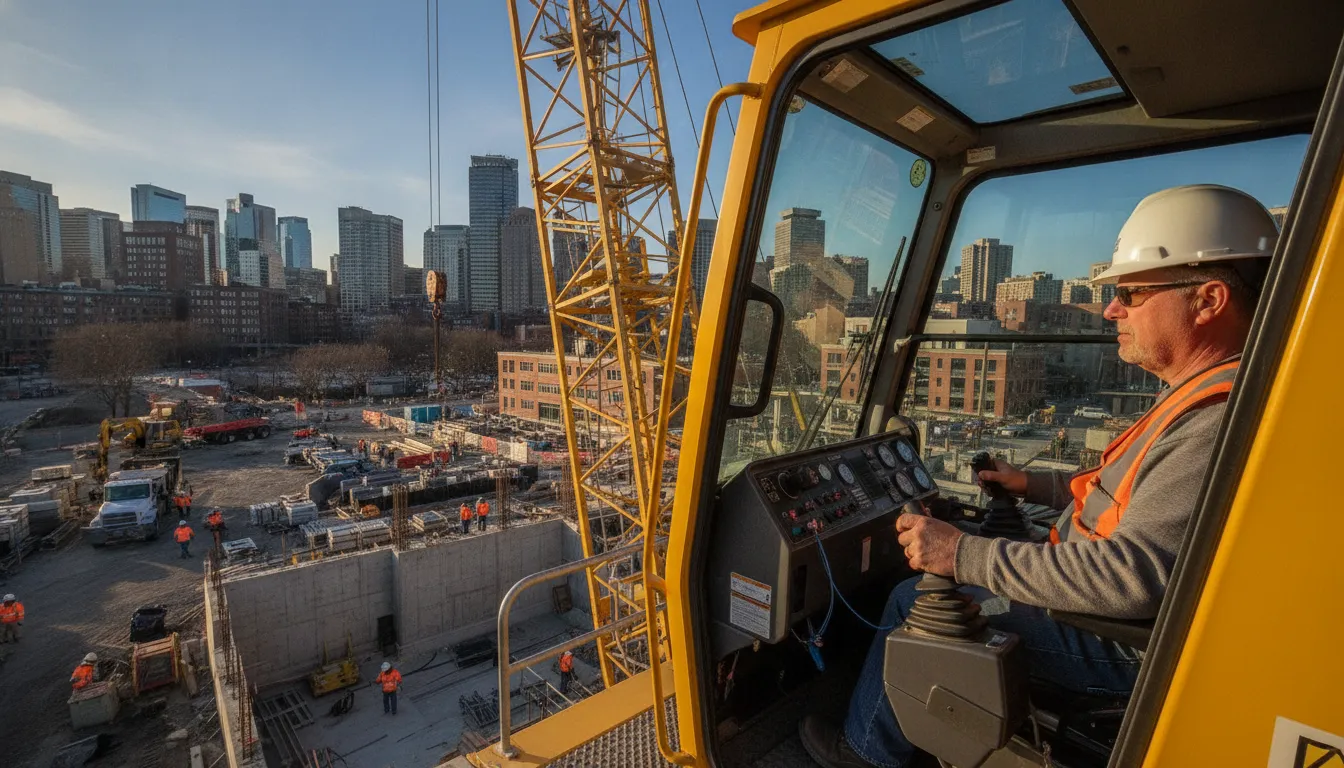
Massachusetts crane and tower operator wages vary by regional labor market. Source: U.S. Department of Labor CareerOneStop.
2025 annual crane and tower operator wages by regional labor market
| Location |
Low |
Median |
High |
| Boston-Cambridge-Newton |
$59,330 |
$98,140 |
$129,790 |
| Worcester |
$71,240 |
$122,260 |
$141,070 |
| Springfield |
$60,410 |
$90,320 |
$119,440 |
| Providence-Warwick |
$55,030 |
$89,880 |
$127,940 |
CareerOneStop Salary Finder lists the Worcester region with the highest median in this comparison, at about $122,260 per year. Boston-Cambridge-Newton follows at approximately $98,140, while Springfield and Providence-Warwick are near $90,000. For context, the national median listed in the same 2025 data is about $68,080.
These regional figures should be used as a planning reference, not as a promise that moving to a particular metro will automatically produce a higher crane operator salary. A job's pay may reflect the type of crane, project complexity, shift schedule, travel requirements, union or non-union agreement, and the operator's license classification. The listed low and high figures also describe a broad range of wages within each labor market, so two operators in the same region may earn different amounts.
Before comparing offers, confirm that the position's duties match the Massachusetts hoisting license category you hold or plan to obtain. A stronger regional market can improve your options, but the right license, documented experience, and safety-focused training still matter when employers evaluate candidates.
How to Qualify as a Crane Operator in Massachusetts
Massachusetts treats crane operation as regulated hoisting work, so the path begins with confirming that you are eligible for the license category your job requires. A higher potential crane operator salary does not replace the need to meet state licensing and training requirements. Use the following sequence to organize your next steps.
- Confirm your age and eligibility. Review the current Division of Occupational Licensure requirements before enrolling or applying. Your employment situation, equipment, and intended classification can affect which license or permit applies. Do not assume that experience operating equipment in another state automatically satisfies Massachusetts requirements. The state law includes a narrow agricultural-use exemption when hoisting machinery is used exclusively for agricultural purposes, but most commercial construction work should be evaluated under the licensing rules.
- Identify the correct hoisting classification. Massachusetts General Laws Chapter 146, Section 53 states that a person may not operate covered hoisting machinery without a license or temporary permit issued through the Division of Occupational Licensure. The law also directs the commissioner to classify hoisting machinery by category and requires at least one category to include cranes and similar equipment. Read the current statute at Massachusetts General Laws Chapter 146, Section 53, then match the equipment you expect to operate with the appropriate classification. For equipment covered by the 1B category, review Massachusetts 1B hoisting test preparation. Other equipment may require a different course or classification, such as 2A and 1C test preparation.
- Complete the required training. Choose preparation that addresses the classification, equipment safety, Massachusetts regulations, and operational procedures covered by the state examination. If your employer needs to prepare several operators, you can arrange to train at your location. Before scheduling, use the provider's test prep applications information to confirm the materials and application steps relevant to your situation.
- Apply for and pass the state examination. Follow the current application and testing instructions for your classification. The exam process evaluates knowledge tied to safe equipment operation, applicable regulations, and practical operating procedures. Training can improve your preparation, but no course can guarantee a licensing outcome. Allow time to review the official requirements and address any missing application information before your test date.
- Renew the license every two years and complete continuing education. A Massachusetts hoisting license must be renewed biennially, and continuing education is required for renewal. Track your expiration date, retain course records, and verify the current renewal rules before the deadline. Staying current helps you remain eligible for regulated work and keeps your training aligned with changes in equipment and state requirements.
This sequence gives employers and operators a practical compliance checklist. Confirm the classification first, because the right training and application path depend on the machinery you plan to operate.
How to Earn More as a Licensed Crane Operator in Massachusetts
A higher crane operator salary usually comes from combining the right license classification with dependable field experience. Massachusetts law requires people operating covered hoisting machinery, including cranes and similar equipment, to hold a license or temporary permit issued through the Division of Occupational Licensure. The law also allows the commissioner to classify hoisting machinery by category, so the equipment you are qualified to operate can affect which jobs you can pursue. Read the Massachusetts hoisting law.
Add classifications that match the work you want
Review the classifications that align with the cranes, telescoping booms, and other equipment used by employers in your target market. An additional classification can make you useful on more job types, but it should be selected deliberately. Start with the equipment you already operate or expect to encounter, then confirm the current state requirements before registering for an exam or course.
Online preparation can help you build a focused study plan around safety, regulations, and operating procedures. The 1B hoisting test preparation online course is one option for operators pursuing preparation related to a 1B telescoping boom crane license. Training does not replace the state's licensing process, so verify the classification and application requirements before testing.
Build a record employers can verify
Credentials open the door, while a strong safety record and documented experience help you compete for better assignments. Keep a current list of equipment operated, project types, dates, responsibilities, and supervisors who can confirm your work. Record relevant training and renewals as well. Employers and project managers need confidence that you can work safely, communicate clearly, complete inspections, and protect the crew and surrounding property.
Endorsements, manufacturer training, or related certifications may also strengthen your profile when they match an employer's equipment or project requirements. Treat each one as a targeted investment rather than collecting certificates without a clear use. Ask hiring managers which qualifications are valued for the work you want.
Compare markets and employment models
Pay can differ substantially between Massachusetts metros and employers. Boston may offer access to large commercial and infrastructure projects, while Worcester and other markets may have different demand, commuting patterns, and wage structures. Union contractors, multi-employer work, and projects covered by public wage determinations may provide another path to stronger total compensation. Review the complete package, including hourly rate, overtime, benefits, travel, and predictable work, instead of comparing base pay alone.
Business Owner Note: You can schedule group training deals for your entire crew at your jobsite, helping multiple employees prepare through one coordinated training plan.
Call 508-212-4735 to enroll in hoisting test preparation today.
Frequently Asked Questions
Can crane operators make $200,000 a year in Massachusetts?
That level of pay is not a typical salary benchmark. Earnings depend on classification, experience, employer, overtime, project type, and location. Treat unusually high figures as possible total compensation in a specific role, not a standard expectation for every operator.
What is the highest paid crane operator salary?
There is no single statewide maximum because employers, contracts, overtime, and specialized work differ. For a realistic comparison, review current wage data by occupation and location, then ask whether the quoted figure includes overtime, benefits, per diem, or fringe payments.
Do you need a license to operate a crane in Massachusetts?
Yes, Massachusetts law generally requires a valid license or temporary permit to operate covered hoisting machinery, including cranes. The Division of Occupational Licensure classifies hoisting machinery by category, and at least one category includes cranes. See Massachusetts General Laws Chapter 146, Section 53.
How can I qualify for higher-paying crane work?
Start by identifying the hoisting category that matches the equipment and work you plan to perform. Prepare for the state-approved exam, which covers equipment safety, regulations, and operating procedures, and keep your license current through required renewal and continuing education. Massachusetts 1B hoisting test preparation can help you prepare for the applicable path.
Is becoming a crane operator worth it in Massachusetts?
It can be a strong fit if you value skilled construction work, can meet licensing requirements, and are prepared to build experience. Compare the local wage, schedule, travel, physical demands, benefits, and training costs before choosing a role, rather than judging the career by salary alone.
Ready to Start Your Crane Operator Career Path?
Proper hoisting test preparation can help you understand the exam topics, safety requirements, and next steps for pursuing Massachusetts crane work. To enroll in Class 1B hoisting test prep, call 508-212-4735 and speak with the MA Hoisting License team about the training option that fits your goals.
Tags: ,