Crane Operator Vacancy: Massachusetts License Guide
27
Aug
Finding a crane operator vacancy can be the start of a strong career step, but a job title alone does not tell you whether the equipment, license classification, training, and site expectations fit. In Massachusetts, treat each posting as a set of questions to answer before you apply, not as proof that you are already eligible to operate.
Call 508-212-4735 for Massachusetts hoisting license training questions.
A crane operator vacancy should be evaluated by checking the equipment involved, the Massachusetts hoisting license classification requested, the employer's safety process, and the documents needed to apply. The Massachusetts Office of Public Safety and Inspections regulates hoisting equipment licenses. Confirm current requirements with official state sources and the employer before relying on a listing.
This guide separates the job-search decision from the licensing decision. You will learn how to read the role, compare it with Massachusetts requirements, choose a training path, ask useful safety questions, and submit an accurate application without making assumptions about pay, employment, or eligibility.
What Does a Crane Operator Vacancy Usually Involve?
A crane operator vacancy usually describes work that combines equipment operation with inspections, lift coordination, communication, and site-specific safety procedures. Daily duties change by machine, load, project, and employer. Read the full posting to identify the actual equipment and responsibilities rather than relying on the word crane alone.
The operator may prepare the machine, review the work area, check relevant equipment information, and coordinate movement with the site team. A posting may mention mobile cranes, telescoping booms, wire rope, rigging, signal communication, lift plans, or material handling. Those terms are useful clues, but they are not substitutes for a direct conversation with the employer.
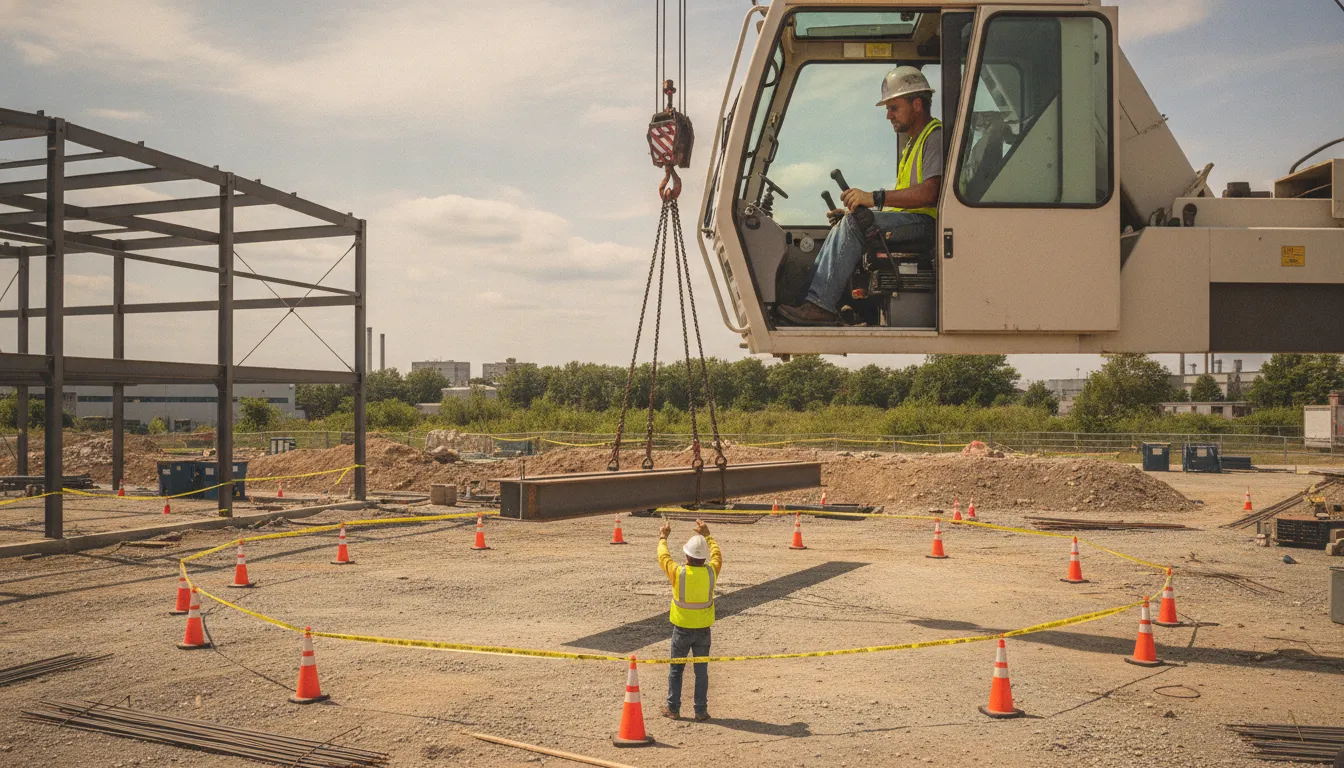
Look for the work location, travel expectations, shift pattern, project type, equipment model or category, and experience the employer considers essential. Some positions are tied to one project. Others involve changing jobsites, outdoor work, irregular hours, or work near traffic and other construction operations. If the listing does not explain the schedule or equipment, make a short question list before applying.
Look beyond the job title
A crane operator vacancy can use broad language even when the work is limited to one equipment type. A listing that says crane may refer to a telescoping boom with wire rope, a telescoping boom without wire rope, or a broader hoisting position. Ask which machine you would operate and which Massachusetts license classification the employer expects.
Also look for the division of responsibility. The operator may work with a signal person, lift director, rigger, superintendent, or other competent person. A responsible employer should be able to explain who plans the lift, who provides site orientation, how communication is handled, and who has authority to stop work when conditions are unsafe.
Questions to answer before applying
- What specific equipment would you operate?
- What license classification does the employer expect?
- Is an active Massachusetts license required on the first day?
- Will the job require travel between jobsites?
- What shift, weather, ground-condition, and physical-work expectations apply?
- Which license, training, medical, or experience documents should accompany the application?
Do not fill gaps in a posting with guesses. Contact the employer for job-specific details, then use the Massachusetts licensing authority for regulatory questions.
Which Massachusetts License Details Should You Check?
The Massachusetts license classification to check depends on the equipment and operation described in the vacancy. Class 1 classifications include several hoisting equipment types, while other classes cover excavating or specialty equipment. Compare the posting with the current Massachusetts hoisting license classifications and official state guidance before enrolling in training.
Massachusetts hoisting classifications are equipment-specific. For example, Class 1B covers telescoping boom equipment with wire rope, while Class 1C covers telescoping boom equipment without wire rope and over 10 tons. Class 1D covers equipment included in 1C with a capacity of 10 tons or less. The exact machine, capacity, and configuration matter.
Class 2 classifications cover excavating equipment such as excavators, backhoes, and front-end loaders. A vacancy may combine crane-related language with excavation, material handling, or multiple machines. If so, list every machine in the posting and ask the employer whether one classification or several are expected. A broad title should not be treated as a broad license.
Separate state requirements from employer requirements
The state license is only one part of an application. An employer may also request experience with a particular machine, a medical qualification, a clean driving record, site orientation, drug-screening compliance, or documentation of prior work. Those requirements belong to the employer's hiring process. They do not change the state classification, and a course cannot guarantee a job.
For the official process, review the Massachusetts hoisting licensing and exams guidance. The state controls the application and examination process. If a posting, older checklist, or social-media comment conflicts with current state instructions, ask the licensing authority which information applies.
Build a requirement comparison
| Job-posting detail | What to compare | Question to ask |
|---|
| Equipment | Machine type, boom configuration, capacity, and attachments | Which exact equipment will I operate? |
| License | Requested Massachusetts classification | Must the license be active before onboarding? |
| Experience | Required versus preferred operating history | What experience is essential on day one? |
| Site work | Ground conditions, weather, traffic, and travel | What site-specific training is provided? |
How Does Training Fit a Crane Operator Vacancy?
Training should match the Massachusetts classification and equipment named in the vacancy. Online preparation can support self-paced study, while classroom preparation provides scheduled instruction and live questions. Before enrolling, confirm the course scope, application support, testing information, and whether the format fits your schedule. Training prepares you for requirements; it does not promise employment.
Start by identifying the license classification that matches the job. Do not select a course because its title includes the word crane. A course may cover mobile crane operation, inspection topics, excavating equipment, or another classification. Compare the course description with the equipment and capacity listed by the employer.
Online preparation
Self-paced online preparation can be useful when your work schedule changes or you need to review material at your own pace. It may help you organize study around equipment terminology, regulations, safety concepts, and exam preparation. Confirm the access period and the classifications covered before purchasing. Keep the state application process separate from the training provider's course process.
Online learning is not a substitute for site orientation or hands-on experience required by an employer. It also does not independently determine whether you meet every state requirement. Use the official state application instructions and ask the employer what experience or onboarding documentation is expected.
Classroom preparation
Classroom instruction may be a better fit when you prefer a scheduled course, want to ask questions in real time, or benefit from learning with other operators. MA Hoisting License provides classroom and online options for Massachusetts operators. The mobile crane operator and inspection classroom course is one option to review, but confirm that its current scope matches the vacancy before registering.
Students who need help comparing options can review the test preparation and application guidance. If you are preparing for more than one operator, ask about group training information and whether instruction can be arranged around your operation.
Call 508-212-4735 to discuss Massachusetts hoisting license training options before you apply.
What Safety Expectations Should You Assess?
A responsible crane operator vacancy should explain how the employer handles equipment inspections, lift planning, communication, exclusion zones, changing site conditions, and stop-work decisions. Ask who directs the lift, who controls signals, and how hazards are reported. These questions help you assess the work process before accepting a position, but they do not replace required training.
Safety expectations should be specific to the equipment and the worksite. Ask whether the employer provides an orientation before assigning operating duties. Find out how inspections are documented, where load information is kept, and how the team responds when ground conditions, visibility, wind, or nearby work changes.
Safety questions for an interview
- Who plans and directs each lift?
- Who is the signal person, and what communication method is used?
- How are pre-use inspections recorded and reviewed?
- How are exclusion zones and overhead hazards controlled?
- What happens when wind, weather, ground conditions, or visibility becomes unsafe?
- Who has authority to stop work, and how is a concern escalated?
The CDC and NIOSH lift-zone safety guidance offers additional context about keeping people clear of hazardous lifting areas. A citation is a starting point for discussion, not a substitute for the employer's site-specific plan or applicable OSHA requirements.
Signals, inspections, and documentation
Good communication is part of operating safely. Ask how hand signals, radios, spotters, and changing instructions are coordinated. You should also understand who can stop a lift when a signal is unclear. If the vacancy combines operating with rigging or signaling, ask whether those duties are separate or assigned to one person.
Do not represent classroom study as operating experience. An accurate application distinguishes equipment you have operated, training you have completed, licenses you hold, and qualifications that are still pending.
Business Owner Note: If your company needs to prepare several operators, group or on-site training may help organize instruction around your operation. Confirm the equipment and classifications your crew needs, then ask about scheduling, locations, and available formats.
How Can You Prepare a Responsible Job Application?
Prepare a responsible application by saving the original listing, recording the equipment and classification requested, separating required qualifications from preferred experience, and labeling every license or training step accurately. Contact the employer about missing details, confirm current state instructions, and submit only documents that are current and yours. This approach protects both the applicant and the hiring team.
Build a listing-specific checklist
- Save the vacancy and record the employer, location, posting date, equipment, shift, travel requirements, application contact, and stated qualifications.
- Compare the listed duties with your current Massachusetts license and documented experience.
- Ask the employer about missing requirements, onboarding, safety orientation, and the date a license must be active.
- Confirm current state application and exam information through official Massachusetts guidance.
- Submit accurate documents and label pending steps clearly.
A jobs resource can help you find a lead, but it cannot confirm that a position remains open. The customer-approved Hoistingjobs.com jobs resource can be used to locate opportunities. Verify the employer, current availability, duties, application instructions, and compensation directly before relying on a listing.
Keep your records accurate
State what is current, what is pending, and what you have actually operated. Do not say that a license is active if the application or examination is incomplete. Do not imply that a training course is an employer qualification unless the employer says so. Clear records make it easier for a hiring team to understand your background.
For state application questions, use the official Massachusetts hoisting engineer license application page. The current state process controls application steps, fees, forms, and examination details. Recheck those details because regulatory instructions can change.
Prepare for the conversation
Use the interview to confirm the equipment, classification, schedule, worksite, reporting structure, safety process, and onboarding expectations. You can also ask whether the position requires experience that is not obvious from the listing. These questions help both sides avoid a mismatch.
Do not assume a job offer, a particular wage, or a licensing outcome. The purpose of careful preparation is to make an accurate application and identify the next verified step.
What Should Massachusetts Employers Consider When Posting a Role?
Employers can make a crane operator vacancy clearer by naming the equipment, capacity, Massachusetts license classification, worksite conditions, schedule, experience requirements, reporting structure, and safety expectations. Distinguishing required qualifications from preferred experience helps applicants self-screen accurately and gives qualified candidates a better basis for applying.
A detailed posting reduces avoidable questions. Name the machine and configuration instead of using crane as the only equipment description. If a role involves more than one machine, list the relevant duties separately. Explain whether the operator will travel, work nights, work outdoors, or coordinate with a dedicated signal person and rigger.
Employers should also state whether the license must be active before the first shift or whether a candidate may complete a stated step during onboarding. Any such arrangement must remain consistent with applicable state requirements. The employer is responsible for confirming that an operator is qualified for the work assigned and for providing site-specific orientation and safety procedures.
Make safety expectations visible
Include the inspection process, lift-planning responsibilities, communication methods, stop-work authority, and expectations for reporting hazards. This information shows applicants how the operation works and gives the interview a practical focus. It also avoids suggesting that a license or course alone covers every condition at a particular site.
Keep employment claims factual
A vacancy should describe the role without promising employment, a particular wage, or a licensing result. Applicants need accurate information about the opportunity, while employers need candidates whose qualifications can be verified. A clear listing supports that exchange without overstating what a license or training program provides.
Frequently Asked Questions
What should I verify before applying for a crane operator vacancy?
Verify the equipment, Massachusetts license classification, work location, schedule, travel, experience expectations, required documents, and safety responsibilities. Ask the employer for details that are missing from the listing. Then confirm current licensing information with OPSI or Mass.gov. Do not assume that a broad job title identifies the license you need.
Do I need a Massachusetts license to operate a crane?
Massachusetts regulates hoisting equipment operation through OPSI, and the applicable requirement depends on the equipment and classification. A job posting may also include employer requirements beyond the state license. Review the current state guidance and ask the employer what must be active before work begins. Only the state can issue the license.
Which training route is best for a crane operator vacancy?
The best route depends on the classification, equipment, schedule, and learning preference connected to the job. Online preparation may suit independent study, while classroom preparation may provide scheduled instruction and live questions. Group or on-site training may fit an employer coordinating several operators. Confirm course scope before enrolling.
What safety questions should I ask about a crane job?
Ask who plans and directs lifts, how signals are handled, how inspections are documented, how exclusion zones are controlled, and what happens when weather, ground conditions, visibility, or an unsafe setup changes. These questions help you understand the employer's process before accepting work and do not replace required site-specific safety training.
Is a jobs website enough to confirm that a position is available?
No. A jobs website can help you find a lead, but the employer is the source for current availability, job duties, schedule, compensation, and application instructions. Save the listing date, contact the employer directly, and avoid making claims about the role until those details are confirmed.
Call 508-212-4735 to discuss your Massachusetts hoisting license training next step.
Tags: ,