Heavy Equipment Operator Training in Massachusetts
18
Aug
Choosing a Massachusetts hoisting license class is not simply a matter of learning to operate a large machine. The class on your license determines which equipment you may legally run. While your preparation must also cover safe operating practices, inspections, hand signals, and the rules that apply on a construction site. Licenses must be renewed every two years, so the right training matters for both new applicants and experienced operators.
Call 508-212-4735 to enroll today.
Heavy equipment operator training should connect the Massachusetts license class to the machines you operate. The skills tested by the state, and OSHA requirements for operator training, certification, and evaluation. That approach helps you prepare for the correct scope instead of studying equipment your license does not cover.
Start by looking at what Massachusetts expects operators to know, then compare the machinery associated with each major license class before choosing an online or instructor-led course.
What Does Heavy Equipment Operator Training Cover in Massachusetts?
Heavy equipment operator training in Massachusetts is more than learning how to move a machine. It prepares applicants to understand the equipment they operate, work safely around people and materials, and demonstrate knowledge required for a state hoisting license. The specific course content depends on the license class and the machinery covered by that class.
Applicants should expect instruction on the working parts of hoisting machinery, safe operating practices, hand signals, and inspection procedures. These subjects are part of the written examination coverage identified by the Massachusetts Department of Public Safety. The state also requires a minimum score of 70% on the OPSI written exam to receive, upgrade, or renew a hoisting license. Review the Massachusetts hoisting licensing and exam requirements before choosing a course.
Call 508-212-4735 to enroll today.
Machine-specific operation and safe work practices
A useful course connects classroom knowledge to the equipment an operator may encounter on a jobsite. That includes controls, operating limitations, stability, load awareness, work-area hazards, and the steps used to inspect equipment before operation. Training also addresses communication. Hand signals and clear coordination matter when an operator cannot see the full work area or must respond to a signal person.
The goal is not to memorize isolated terms. Operators need to recognize unsafe conditions and make practical decisions before equipment moves. Inspection procedures help identify problems that should be reported or corrected rather than ignored. Safe operating practices help reduce risk to workers, property, and the public.
Why the license class matters
Massachusetts hoisting licenses are class-based. The class determines which machines an operator may legally run, so completing general equipment training does not automatically authorize operation of every type of heavy equipment. Class 1 covers hoisting equipment such as derricks and cranes, with 1D associated with indoor warehouse forklifts. Class 2 covers excavating equipment, including excavators, backhoes, and front-end loaders. Class 3 includes overhead cranes, jib cranes, and pneumatic or electric hoists. Class 4 covers specialized equipment such as drill rigs, pile drivers, concrete pumps, catch basin cleaners, and sign-hangers. The applicable restrictions and endorsements should be confirmed before operating a particular machine.
For a practical breakdown of the equipment covered by each credential, see Massachusetts hoisting license classes near you. Choosing training by the actual machine and job duties helps an operator prepare for the correct exam instead of paying for a course that does not match the needed authorization.
In short, the right program combines equipment knowledge, inspections, communication, safe practices, and exam preparation. It should also make clear where the course ends and the state's licensing decision begins. A training provider can help organize preparation, but operators remain responsible for meeting Massachusetts requirements and operating only within the authority of their license class.
Which Machines Fall Under Each Massachusetts Hoisting License Class?
Massachusetts hoisting license classes are tied to the type of machine and work an operator performs. Choosing training by job title alone can leave a worker prepared for the wrong equipment. Use the class descriptions below as a starting point, then confirm the exact restriction and subclass that applies to the machine, employer, and operating conditions.
Massachusetts hoisting license classes and covered equipment
| License class |
Equipment commonly covered |
Workplace examples and notes |
| Class 1, 1A-1D |
Derricks, cranes, and hoisting gear. Class 1D covers indoor warehouse forklifts. |
Used where the primary work involves lifting, suspending, placing, or moving loads. The 1D restriction is specific to indoor warehouse forklift operation. |
| Class 2, 2A-2D |
Excavators, backhoes, loader/backhoes, and front-end loaders. |
Common on excavation, trenching, site preparation, loading, and material-handling jobs. See the Massachusetts excavator license (Class 2A) and the MA Class 2B license for backhoes and front-end loaders for more focused guidance. |
| Class 3, including 3A |
Overhead cranes, jib cranes, and electric or pneumatic hoists. |
Applies to lifting equipment powered or operated through electric and pneumatic systems. Review the Massachusetts Class 3A hoisting license guide when this equipment is part of the job. |
| Class 4, 4B-4G |
Specialty equipment such as drill rigs, pile drivers, concrete pumps, catch basin cleaners, and sign-hangers. |
These subclasses address specialized operations. The right class depends on the specific machine and activity, so do not assume a general excavating or hoisting license covers specialty work. |
The state guide to engineering restrictions is the controlling reference for how these classes and subclasses are defined. Read the current Massachusetts guide to engineering restrictions before registering for heavy equipment operator training or assigning an operator to a new machine. A license class is not a general permission slip for every piece of equipment at a jobsite. The restriction can matter just as much as the class number.
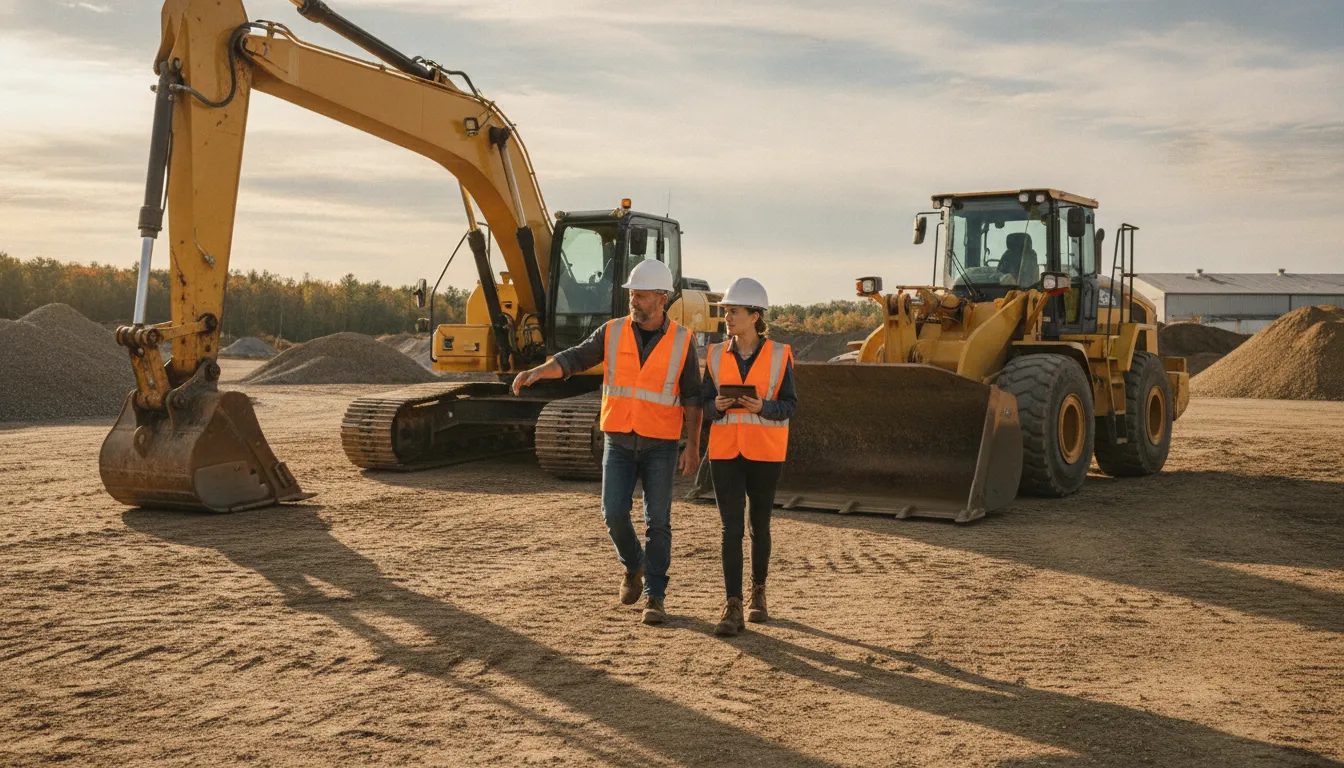
Two additional designations may appear in Massachusetts licensing discussions. HA means Hoisting Apprentice, a supervised training status rather than unrestricted authority to operate independently. HEML means Municipal Limited, which is associated with municipal public-works operation within specified classes and limits. Those designations should be matched to the actual duties and setting, not treated as interchangeable with a standard class license.
For an employer, the practical process is straightforward: list every machine the worker will operate. Identify the corresponding class or subclass, and compare that list with the employee's current license. For an individual operator, bring the machine model and job duties to the training provider or state licensing contact before enrolling. That small check can prevent a costly mismatch between a course and the work you need to perform.
Keep the equipment list current when responsibilities change. A worker who moves from a loader to a crane, or from ordinary excavation to specialty drilling, may need a different class or additional restriction. Training should also cover inspection routines, controls, load awareness, communication, and safe operating practices appropriate to the machine. Matching the license, training, and assignment protects the operator and gives the company a clearer compliance record.
How OSHA Standards Shape Hoisting Operator Training
Massachusetts hoisting preparation is not limited to learning how to move a load or operate a control panel. It also develops the safety knowledge operators need when working around cranes, derricks, hoists, workers, and changing jobsite conditions. OSHA requirements provide an important framework for that preparation, especially for construction employers who must verify that operators are trained, certified, and evaluated for the equipment they use.
OSHA's construction rules identify operator training, certification, and evaluation as core requirements for covered crane operations. The requirements appear in 29 CFR 1926 Subpart CC, including section 1926.1427, which addresses qualification and evaluation of operators. Read more about OSHA hoisting and excavation safety requirements in Massachusetts before choosing a course or assigning equipment to a new operator.
What OSHA's operator rules mean on a Massachusetts jobsite
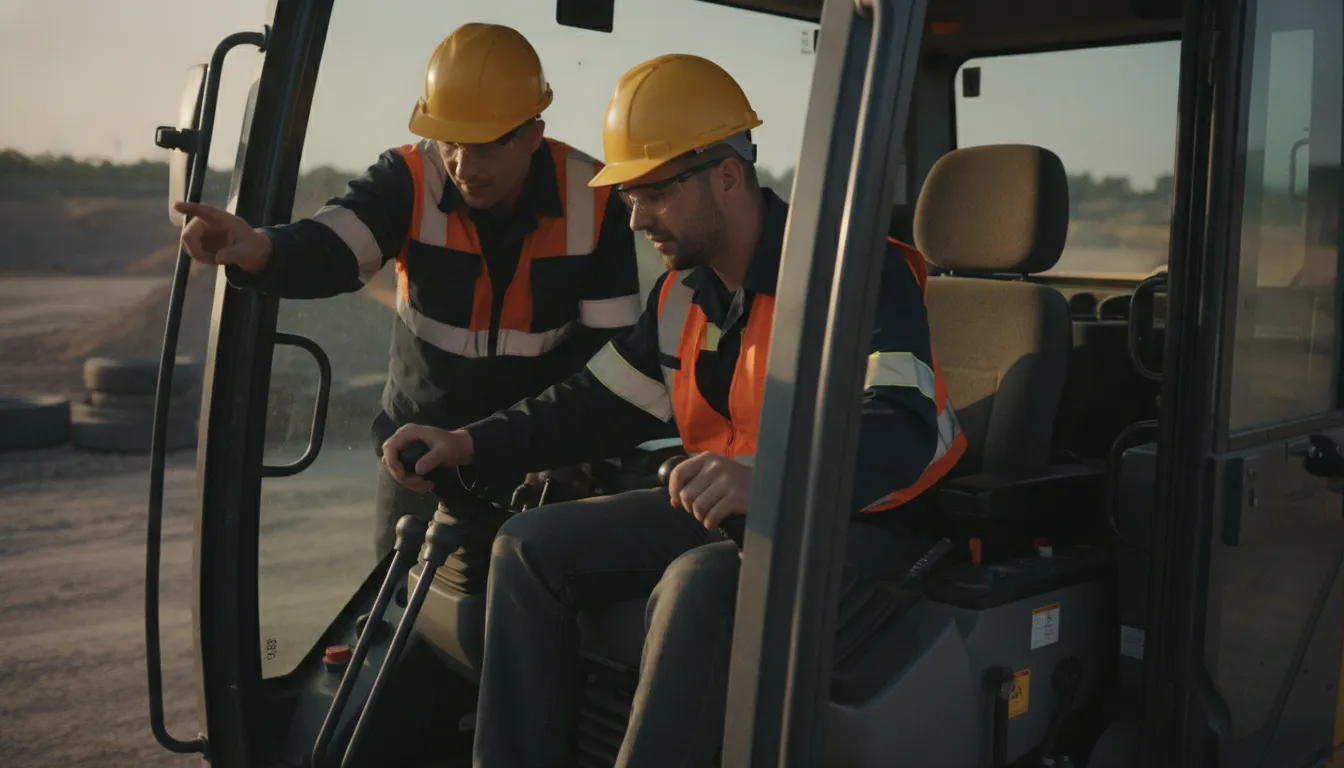
For an employer, training is more than a certificate kept in a personnel file. The operator must understand the equipment's controls and functions, recognize hazards, and demonstrate the ability to perform the work safely. Evaluation is especially important because classroom knowledge alone does not show whether someone can apply safe practices while operating equipment around people, structures, materials, and other machines.
That is why effective heavy equipment operator training connects technical instruction with decisions made in the field. Operators should learn to assess the work area, communicate with signal persons and other crew members, follow site procedures, and stop when conditions are unsafe. These habits support OSHA's emphasis on qualified operation rather than simply treating training as a one-time formality.
How Massachusetts hoisting courses incorporate safety standards
Massachusetts hoisting curricula integrate OSHA-driven safety standards with the knowledge required for the applicable state license class. The state classification determines which equipment an operator may legally run, while OSHA rules help shape the safe-work expectations surrounding construction equipment. Both pieces matter. A person may understand general jobsite safety but still need the correct Massachusetts license classification for a specific machine. Conversely, holding a state credential does not remove the employer's responsibility to evaluate the operator for the equipment and work being performed.
Training should therefore be selected by equipment, work setting, and responsibility. Review the machine covered by the intended class, then confirm that the course addresses inspection practices, operating limitations, communication, and hazard recognition relevant to the job. This approach gives individual operators a clearer path and gives companies better documentation for assigning work responsibly.
OSHA standards can change, and site-specific rules may add requirements. Use current OSHA and Massachusetts guidance when making a compliance decision, and ask a qualified training provider about the right course for your equipment and license path.
Online vs. In-Person Heavy Equipment Operator Training
The right training format depends on your schedule, learning preferences, and the kind of preparation you need before pursuing or renewing a Massachusetts hoisting license. Online courses provide flexibility for working operators, while instructor-led training gives you a set classroom schedule and direct access to an experienced instructor.
MA Hoisting License offers both options. Its self-paced online courses are available 24/7, allowing you to study around shifts, jobsite demands, or family responsibilities. You can review course material when your schedule permits instead of traveling to a classroom for every session. This format can be practical for operators who are comfortable reading technical material independently and who need to fit preparation around full-time construction work.
Self-paced does not mean the subject matter is less important. You still need to understand the Massachusetts license class connected to the equipment you operate, along with the safety practices and compliance requirements covered in the course. If you are preparing for a renewal, an online format can also make it easier to revisit key material before you test or complete the renewal process. Review the Massachusetts hoisting license renewal guide to determine which course best fits your situation.
In-person training may be a better fit when you learn best through discussion, want to ask questions as they arise, or prefer a structured classroom environment. MA Hoisting License provides instructor-led training at five Massachusetts locations: Plainville, Peabody, Worcester, Southbridge, and West Springfield. A scheduled class creates a clear start and finish date, which can help operators who find it difficult to maintain momentum in an open-ended online course.
Classroom preparation can be especially useful when you want an instructor to clarify license classifications, equipment terminology, or exam-preparation concerns. The provider brings 35 years of experience to its training programs and offers a guarantee-success policy for its courses. That policy is a preparation benefit, not a promise that every applicant will receive a license, since licensing decisions and eligibility remain subject to state requirements.
Language access matters, too. Spanish-language options are available for workers who prefer to learn in Spanish, helping more members of a construction team engage with the material clearly. Before enrolling, compare the course format, location, timing, and language support with your actual work schedule. The best choice is the one that lets you complete the material carefully and arrive prepared to meet the requirements for your Massachusetts hoisting license.
Who Needs Heavy Equipment Operator Training: Operators and Crews
Heavy equipment operator training is relevant to more than someone applying for a first Massachusetts hoisting license. It also supports operators adding a new classification, preparing for an exam, or keeping an existing license current. Construction companies, safety managers, HR teams, and operations leaders may need a coordinated training plan when several employees operate regulated equipment.
Call 508-212-4735 to enroll today.
For an individual operator, the right training path begins with the work you perform and the equipment you need to operate. Massachusetts hoisting licenses are classification-based, so a course should help you connect the applicable class with the machines. Operating practices, hand signals, inspection procedures, and exam topics you will encounter. A first-time applicant may need foundational preparation, while an experienced operator may need focused study before an upgrade or renewal.
When do individual operators need training?
There are three common points when training becomes especially useful:
- Before a first license: New operators need a structured introduction to safe operation, equipment terminology, and Massachusetts licensing expectations before sitting for the required exam.
- When adding a classification: An operator who moves from one type of equipment to another may need preparation that matches the additional class and the work it covers. Training should be selected around the intended equipment, not simply the job title.
- Before a biennial renewal: Massachusetts hoisting licenses must be renewed every 2 years, according to the Massachusetts licensing and exams guidance. Renewal preparation gives operators a chance to review current requirements and refresh safety knowledge before the license deadline.
Online, self-paced study can help a working operator fit preparation around job and family responsibilities. Instructor-led training can provide a more direct setting for questions and review. Either way, the course should be Massachusetts-specific and should not be treated as a substitute for checking current requirements with the state.
Why do construction companies arrange crew training?
A company may arrange group training when multiple employees need initial licensing, added classifications, or renewal preparation at roughly the same time. Centralizing the process can make scheduling easier for supervisors and give the safety or HR team a clearer way to track who is preparing, testing, or approaching renewal. It can also reduce the risk of treating every operator's training need as identical when classifications and job duties differ.
Business Owner Note: You can schedule on-site group hoisting training for your crew at the jobsite, helping your team prepare without sending every employee to a separate training location.
Before booking group instruction, list the equipment each employee operates, the license class connected to that work, and each employee's renewal date. Then ask the training provider how the program can accommodate different experience levels, classifications, schedules, and language needs. A practical plan serves both the operator seeking a credential and the company responsible for safe, compliant operations.
Frequently Asked Questions
What machines can I operate with a Massachusetts hoisting license?
Your license class controls the equipment you may legally operate. Class 1 covers hoisting equipment such as cranes and derricks, Class 2 covers excavators, backhoes, and front-end loaders. Class 3 covers electric and pneumatic machinery, and Class 4 covers specialty equipment such as drill rigs and concrete pumps. Review the Massachusetts restrictions before choosing a course: Massachusetts class restrictions.
How long does heavy equipment operator training take?
There is no single timeline for every operator. The length depends on your license class, prior experience, course format, and preparation needs. Self-paced study can fit around work, while instructor-led training provides scheduled classroom time and direct guidance. Plan enough time to understand the machine, safety procedures, and exam requirements rather than choosing a course based only on speed.
Does Massachusetts require OSHA training for hoisting?
OSHA requires operator training, certification, and evaluation for covered crane operations in construction under 29 CFR 1926.1427. OSHA crane and derrick requirements are addressed across its construction standards, while Massachusetts hoisting courses incorporate the safety knowledge needed for state licensing and workplace operation. Read the applicable OSHA operator requirements.
What does heavy equipment operator training include?
Training typically covers the equipment assigned to your class, safe operating practices, inspection procedures, hand signals, and the working parts of hoisting machinery. Massachusetts applicants must be at least 18, complete the application process, and pass the required examination. The state says applicants need a minimum score of 70% on the OPSI written exam to receive, upgrade, or renew a license: Massachusetts education requirements.
When does a Massachusetts hoisting license need to be renewed?
Massachusetts hoisting licenses must be renewed every two years. Start reviewing your renewal requirements before the expiration date, especially if your job assignment or equipment responsibilities have changed. Confirm your current class, prepare for the applicable exam or education requirements, and keep your license status aligned with the machinery you operate. The state renewal rule is summarized on its hoisting licensing and exams page.
Ready to Plan Your Massachusetts Training?
Choosing training that matches your hoisting license class can help you prepare for the machines and safety responsibilities involved in your work. Review the options that fit your role, whether you need individual instruction or support for a crew, then take the next step plainly:
Call 508-212-4735 to enroll in Massachusetts heavy equipment operator training today.
Tags: ,