How to Become a Crane Operator in Massachusetts
19
Aug
Operating a crane in Massachusetts requires more than learning the controls. You need the right education, practical preparation, and state authorization for the equipment you plan to operate, while employers must also meet federal safety requirements.
Call 508-212-4735 to discuss your training options.
To understand how to become a crane operator, start by identifying the Massachusetts hoisting license classification you need. You then complete the required education, prepare for and pass the state exam, and build the knowledge expected under OSHA 29 CFR 1926 Subpart CC. NCCCO certification may also provide a valuable industry credential, but it is separate from the Massachusetts license.
The process becomes clearer when you separate the state licensing steps from the federal competency and workplace-safety standards that apply on the job. The next section explains the Massachusetts requirements and what they mean for your career path.
What It Takes to Become a Crane Operator in Massachusetts
The first requirement is not simply learning to run a crane. To operate hoisting machinery in Massachusetts, you must obtain a state-issued hoisting engineer license from the Department of Public Safety. The license process includes meeting the state's eligibility and education requirements, selecting the classification that matches the equipment you intend to operate, and passing the applicable written exam.
Start by confirming the current baseline requirements with the Department of Public Safety. Applicants should be prepared to document the required minimum age and education background, such as a diploma or accepted equivalent, before submitting an application. Requirements can change, so check the state's current guidance rather than relying on an older checklist or advice from another operator.
Choose the classification that matches your work
Massachusetts hoisting licenses are organized by equipment classification. A crane operator needs the classification that covers the type of crane and work involved, not simply a general safety course certificate. Review the Massachusetts hoisting license classifications before enrolling or filing paperwork. The right classification affects the training you need, the material covered on the exam, and the equipment you can legally operate under that license.
The state's hoisting machinery rules are codified in 230 CMR 6.00. That regulation is the reference point for Massachusetts licensing and operating requirements. Training can help you understand the rules and prepare for testing, but the Commonwealth issues the license. No school can promise that the state will approve an application or issue a particular classification.
Pass the state exam and keep the license current
Applicants must pass a state-specific written hoisting license exam to obtain the license. Exam preparation should therefore cover the selected equipment classification, applicable regulations, safe operating practices, and the documentation required for the application. The state also provides an online application process through its hoisting engineer license portal.
Once issued, a Massachusetts hoisting license is not permanent. Operators must renew their licenses every two years. Mark the renewal date early and confirm whether the current process requires updated education, documentation, or other steps. Keeping the license current matters just as much as earning it initially, especially when an employer needs verifiable authorization for scheduled work.
Business Owner Note: Companies can coordinate classification-specific training for multiple operators, including group or on-site options, instead of leaving each employee to navigate the requirements alone.
The Federal Standard: OSHA 29 CFR 1926 Subpart CC
Massachusetts licensing is one part of the path. If you operate a crane on a construction site, you also work within the federal requirements in OSHA 29 CFR 1926 Subpart CC. The standard covers cranes and derricks used in construction, including mobile, tower, and overhead cranes. It establishes a baseline for operator qualification, equipment safety, and employer responsibilities.
Under OSHA 1926.1427, the employer must ensure that each operator is trained, certified, or qualified and evaluated under the rule before operating covered equipment. That federal requirement does not replace a Massachusetts hoisting engineer license. Instead, it adds workplace requirements that employers must apply to the specific equipment, jobsite, and operator.
Training, certification, and evaluation are separate responsibilities
Knowing how to become a crane operator means understanding that a course completion document alone may not address every workplace requirement. Training should prepare you to operate the equipment safely, understand its operating limits, and recognize the hazards that affect a lift. Depending on the employer's process and the equipment involved, certification or another accepted qualification may also be required.
OSHA also requires the operator's ability to operate the crane safely to be evaluated by a qualified person. The evaluation should reflect the crane and work the operator will actually perform. Operators must be familiar with the specific crane model and its operating information, rather than treating every machine as interchangeable. Employers are responsible for documenting operator training, certification, and evaluation records so they can show that the requirements were addressed.
Inspections and jobsite awareness protect every lift
Federal compliance continues after training. Before use, operators must inspect their equipment to identify conditions that could make it unsafe to operate. A pre-use inspection should be treated as an active safety check, not a signature copied from the previous shift. Follow the applicable equipment procedures and report defects through the employer's process before beginning work.
Operators must also maintain awareness of overhead power lines, nearby personnel, ground conditions, and other hazards around the crane. A lift can be technically within the machine's capacity and still be unsafe because of changing site conditions or poor communication. Review the work area, understand the lift plan, and stop when a condition falls outside your training or authorization.
For the complete federal requirements, review OSHA's Subpart CC regulation and its cranes and derricks safety FAQs. These resources provide the federal backdrop. Your Massachusetts license, employer evaluation, equipment-specific training, inspections, and jobsite controls must work together before you take responsibility for a lift.
What Training and Education Do You Need?
Training should prepare you for two related responsibilities: meeting Massachusetts hoisting license requirements and operating crane equipment safely on an active jobsite. The state identifies education requirements for hoisting engineer license candidates, and applicants must pass the state exam before receiving a license. Review the current requirements through the Massachusetts education requirements page rather than relying on an old course outline.
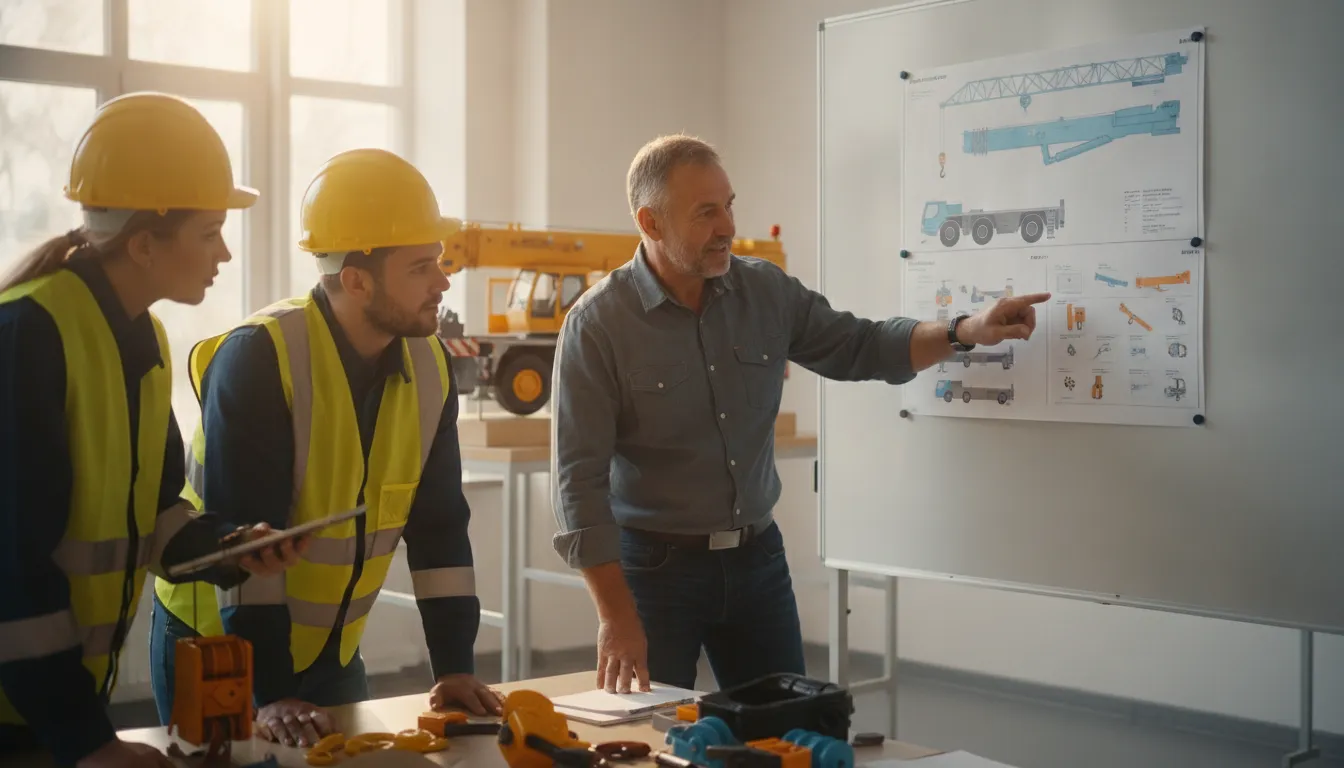
A practical preparation path combines instruction with testing. Classroom courses give you direct access to an instructor, structured study time, and discussion of equipment-specific rules. Online training gives working operators more flexibility, especially when travel or rotating shifts make a fixed schedule difficult. MA Hoisting License offers both formats, including a 24/7 online platform and training at five Massachusetts locations: Plainville, Peabody, Worcester, Southbridge, and West Springfield.
Build the knowledge required for the state exam
State exam preparation should cover the regulations and operating concepts tied to your equipment classification. That includes understanding how the machinery is used, which safety requirements apply, and how to interpret the rules you will encounter during the licensing process. Training does not replace the state examination. It gives you a more organized way to study before testing at a state-authorized facility.
When choosing a course, confirm that the instruction matches your intended license classification and experience level. Application assistance can also help you identify the appropriate next step and avoid preventable paperwork problems. Operators who need support in Spanish or employers coordinating instruction for a full crew can ask about language and group-training options.
Prepare for NCCCO written and practical testing
Some operators also pursue NCCCO certification. The National Commission for the Certification of Crane Operators describes its program as an internationally recognized assessment of crane operator knowledge and skill. Its certification process includes written and practical examinations, so preparation must go beyond memorizing definitions.
Practical study should include load charts, rigging principles, and site safety protocols. Load-chart work helps operators connect a crane's configuration and operating limits to the planned lift. Rigging knowledge matters because improper load handling can create serious hazards before the operator ever raises the load. Safety preparation should also address inspections, communication, changing site conditions, and awareness of people or hazards around the equipment.
For focused preparation, review the mobile crane operator test preparation course. Whether your goal is to understand how to become a crane operator, earn a Massachusetts license. Or add a professional certification, select training that reflects the equipment you will actually operate and the tests you will take.
How to Become a Crane Operator in Massachusetts: Step-by-Step
Learning how to become a crane operator in Massachusetts requires more than learning to move a load. You must follow the state licensing process, prepare for the correct exam, and build the practical knowledge needed to work safely on a construction site. Use this sequence to organize your next steps without confusing training, testing, and state authorization.
- Confirm the license path and basic requirements. Start by identifying the hoisting license classification that matches the crane or hoisting equipment you intend to operate. Massachusetts requires a state-issued hoisting engineer license to operate hoisting machinery, as explained by the Massachusetts Department of Public Safety. Review the applicable education and eligibility requirements before registering for a course. The right classification matters because the exam and operating authority must match the equipment involved.
- Complete the required education and training. Massachusetts applicants may need documented education or training hours before they are eligible for the state exam. Check the current education requirements for a hoisting engineer license rather than relying on an informal estimate. Effective preparation can combine classroom instruction with online study and should cover the regulations, equipment knowledge, load charts, rigging principles, and site-safety practices expected of a responsible operator. MA Hoisting License offers training in Plainville, Peabody, Worcester, Southbridge, and West Springfield, along with online access for operators who need a flexible schedule.
- Prepare for the equipment-specific state exam. Choose preparation that reflects the classification you plan to test for. A focused option such as mobile crane operator test preparation can help you work through the technical material before test day. Training does not replace the state exam, and no school can issue the license. It gives you a structured way to study the Massachusetts rules and safety concepts you will need to demonstrate.
- Pass the written hoisting license exam. Candidates must pass the Massachusetts written hoisting license exam to obtain the license. The exam includes knowledge of hoisting machinery regulations and is administered through state-authorized testing facilities. Bring the preparation process to a practical level by reviewing operating limits, load charts, inspection responsibilities, and safe communication around the crane. MA Hoisting License can provide application assistance and help you understand the steps leading into testing.
- Submit your application through the Massachusetts online portal. After meeting the education and examination requirements, apply through the state's MA hoisting license application forms resource and the official online application portal. Carefully check your documentation, classification, and supporting information before submitting. Application assistance can be especially useful if you are unsure which forms apply or want a second review of the submission sequence.
- Receive the license, then maintain it. The state issues the hoisting license after the application process is completed. Once licensed, continue following Massachusetts hoisting rules and keep your knowledge current. Licenses must be renewed every two years, so record the renewal date and begin early enough to avoid a lapse. Employers arranging training for multiple operators can also ask about group or on-site instruction, while Spanish-language support may help crews complete the process consistently.
How Does the Hoisting License Exam Work?
The Massachusetts hoisting license exam is a written, state-specific test. Applicants must pass it before the state can issue a hoisting engineer license, which is required to operate hoisting machinery in Massachusetts. The training provider can prepare you and help with the application, but the license itself comes from the state.
The exam focuses on the equipment and classification you are seeking. Candidates must demonstrate knowledge of hoisting machinery regulations, equipment-specific requirements, and safety standards. Review the current requirements through the Massachusetts hoisting licensing and exams information before you submit an application or schedule testing.
What does the written exam cover?
Expect questions that connect regulations to decisions made on an active job site. Your preparation should include the operating rules for the equipment covered by your application, applicable Massachusetts hoisting regulations, and the safety practices that prevent unsafe lifts. The governing rules are codified under 230 CMR 6.00, so studying general crane material alone may leave gaps.
Pay particular attention to terminology, operating limitations, and the responsibilities associated with your classification. A practical study plan is more useful than trying to memorize isolated answers. Work through representative questions, identify weak areas, and confirm how the rules apply to the equipment you expect to operate.
Where do you take the Massachusetts hoisting exam?
The exam is administered at testing facilities authorized by the state. That means the school where you prepare and the facility where you test may be separate. Check the current testing instructions and approved location information before making travel plans, because availability and scheduling details can change.
How should you prepare before scheduling?
Choose preparation that matches your work schedule and experience. Classroom instruction gives you direct access to an instructor and time to discuss equipment-specific questions. Online training can make studying more manageable for operators working variable shifts or traveling between jobs. Either way, preparation should cover the applicable regulations, safety standards, and exam expectations rather than relying on informal job-site experience alone.
Application assistance can also reduce avoidable delays. A training provider can help you understand the required paperwork, identify the appropriate license path, and prepare for the state testing process. You can review the application forms for a MA hoisting license before enrolling. The state reviews the application and issues the license, so no course should promise a licensing outcome.
Business Owner Note: Employers can arrange group training so operators prepare around crew schedules while building a consistent compliance process.
How to Find Crane Operator Jobs and Earn More
A license gives you the legal foundation to pursue crane work. But employers also look for evidence that you can operate safely, communicate clearly, and contribute on an active jobsite. Build those signals deliberately as you move from training into your first position.
Understand the earning picture
Crane operation can provide a strong skilled-trade career path. A 2023 Bureau of Labor Statistics figure cited in industry training guidance placed the national mean wage at approximately $32.71 per hour, or $68,040 per year. The same source reported more than 42,000 workers and projected job growth above the national average. Treat national figures as context, not a promise of Massachusetts pay. Your classification, experience, employer, overtime, project type, and ability to handle specialized equipment will affect actual compensation.
NCCCO certification can strengthen your position with employers. The National Commission for the Certification of Crane Operators describes its credential as an internationally recognized assessment of operator knowledge and skill. Its process includes written and practical examinations, giving hiring managers a clearer benchmark than an attendance certificate alone. It does not replace a Massachusetts hoisting license. Instead, it can complement the state authorization and employer requirements that apply to your work.
Turn training into job opportunities
Start with formal preparation that covers more than test vocabulary. Employers value operators who understand load charts, rigging principles, inspections, hand signals, and site safety protocols. Keep copies of your license, training records, examination results, and any practical credentials ready for applications. Ask instructors which classifications and equipment align with local demand, then search for those terms directly.
Networking is practical in this trade. Speak with contractors, crane rental companies, union representatives, equipment dealers, and experienced operators. Apprenticeships and entry-level ground roles can provide supervised exposure to lift planning, signaling, rigging, and daily inspections while you build experience. Apply consistently, follow up professionally, and be specific about the equipment you are prepared to operate.
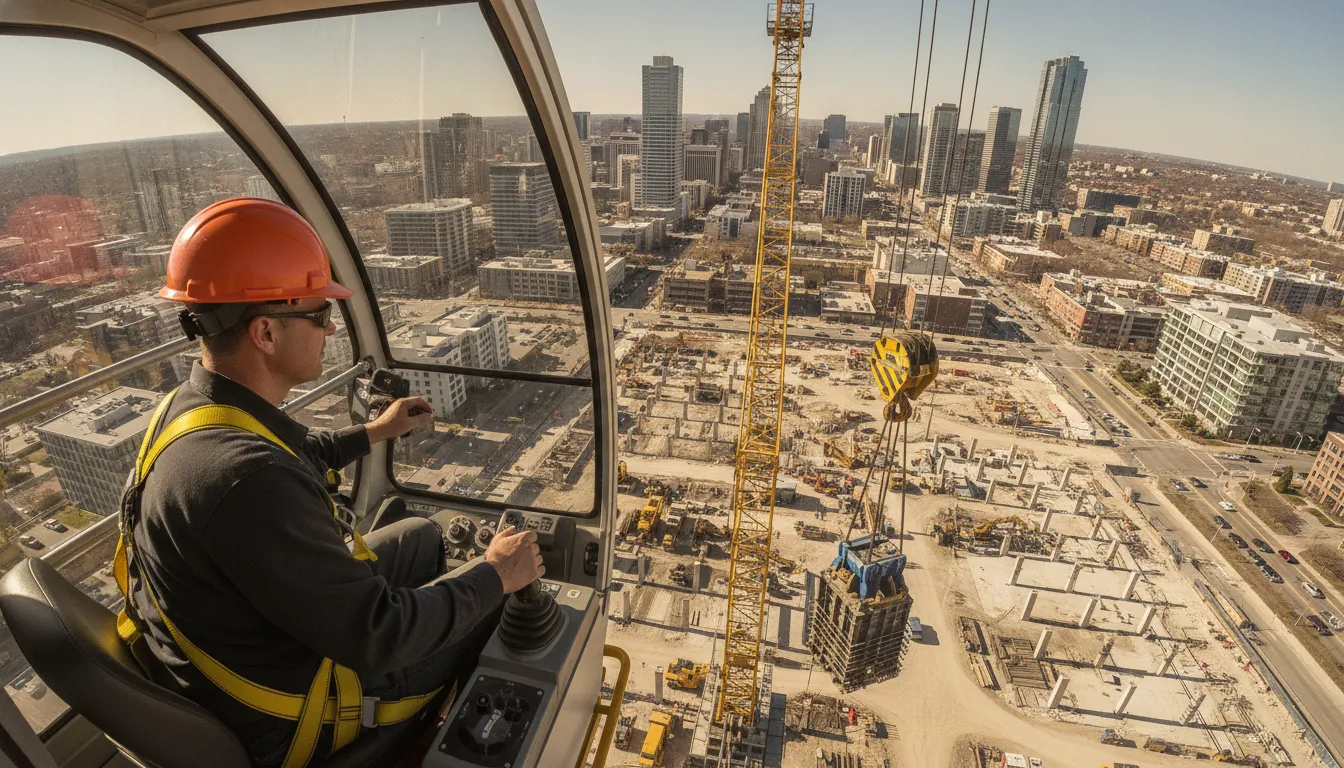
Business Owner Note: Group training at your jobsite can help employers build a documented pipeline of qualified crew members instead of waiting for each worker to arrange preparation independently. Ask about on-site training at your location to keep the whole crew moving on the same schedule.
For individual operators, ask whether training is available in Spanish or online as well as in person. A clear plan for licensing, certification, and supervised experience makes your application stronger and gives employers confidence in your readiness.
NCCCO Certification vs. Massachusetts Hoisting License
If you are researching how to become a crane operator, treat these credentials as complementary rather than interchangeable. Each addresses a different part of the work: NCCCO certification measures industry skills. While a Massachusetts hoisting license provides the state authorization required to operate hoisting machinery in Massachusetts.
How NCCCO certification and the Massachusetts hoisting license differ
| Credential |
What it represents |
Assessment or requirement |
Where it applies |
| NCCCO certification |
An internationally recognized assessment of crane operator knowledge and skill. It can serve as a benchmark that many employers recognize when evaluating operator qualifications. |
The certification process includes written and practical examinations. Preparation commonly covers equipment operation, load charts, rigging principles, and safe work practices. |
Industry and employer qualification contexts. Review the NCCCO mobile crane certification overview for program details. |
| Massachusetts hoisting license |
A state-issued authorization from the Massachusetts Department of Public Safety. Massachusetts law requires the appropriate hoisting engineer license for covered hoisting work. |
Applicants must meet the applicable education requirements, submit an application, and pass the written state hoisting license examination. The exam addresses Massachusetts hoisting machinery regulations and is administered at state-authorized testing facilities. |
Massachusetts. The license is governed by state requirements, including 230 CMR 6.00, and must be renewed every two years. |
Holding one credential does not automatically replace the other. A Massachusetts operator may need the state license to perform legally authorized work in the Commonwealth. While an employer may also value NCCCO certification as evidence of tested knowledge and practical ability. Federal OSHA requirements add another layer: OSHA's crane rule resources explain the broader certification and qualification framework for construction work.
Before enrolling, identify the equipment classification and job requirements you are targeting. Then confirm the current Massachusetts licensing requirements and the employer's expectations so your training plan covers both state compliance and jobsite competence. For companies preparing a full crew, review in-house training options that can be delivered around work schedules.
Call 508-212-4735 to review prep-course options for your crane operator license.
Frequently Asked Questions
What are the requirements to become a crane operator in Massachusetts?
Start by meeting the education requirements for the Massachusetts hoisting engineer license, completing appropriate training, and preparing for the state written exam. You must pass that exam before the state can issue your license. Review the current requirements on the Massachusetts education requirements page and apply through the state's online portal.
Do I need certification to operate a crane?
Yes, construction work also requires operator training, certification or qualification, and evaluation under OSHA 29 CFR 1926.1427. The employer must ensure the operator is evaluated by a qualified person. Requirements can vary by equipment and work situation, so review the applicable OSHA standard with your employer.
What is the difference between a Massachusetts hoisting license and NCCCO certification?
A Massachusetts hoisting engineer license is state authorization to operate hoisting machinery in Massachusetts, and applicants must pass the state's written exam. NCCCO certification is an industry assessment of crane knowledge and skills. They address different requirements, so one should not automatically be treated as a substitute for the other.
How long does it take to become a crane operator?
The timeline depends on your prior experience, education requirements, training schedule, and exam readiness. Some candidates use classroom instruction, while others combine online preparation with state testing. Build in enough time to document required education, prepare for equipment-specific rules, and complete the application process before scheduling your exam.
Ready to Start Your Crane Operator Path?
Clear preparation can help you understand the training, application, and exam steps before you pursue a Massachusetts hoisting license. Choose a course format that fits your schedule and focus on the crane classification you need.
Call 508-212-4735 to enroll in MA Hoisting License prep courses for your crane operator or hoisting license.
Tags: ,