MA Class 1D Hoisting License: Warehouse Forklift Certification Guide
03
Jul
In Massachusetts, anyone operating warehouse forklifts, reach trucks, or order pickers inside a building must hold a valid MA Class 1D Hoisting License. Many operators mistakenly assume that standard federal OSHA safety training is the only credential required to remain compliant. However, Massachusetts state law mandates this specific hoisting license as a separate, state-enforced requirement for all industrial warehouse forklift operations.
The MA Class 1D Hoisting License is a state-required permit for operating indoor warehouse forklifts, reach trucks, and order pickers in Massachusetts. Separate from federal OSHA training, this license requires operators to be at least 18 years old. Submit an application with a DOT medical card, and pass an OPSI written exam.
Learning these state regulations is the first step toward maintaining workplace safety and compliance. Many operators find the difference between federal and state rules confusing. Clarifying what the licensing process involves provides the best start for your material handling career.
Key Takeaways: Warehouse Forklift License Basics
- State-Mandated Permit: In Massachusetts, federal OSHA certification alone is insufficient; operators must also hold a valid MA Class 1D Hoisting License to run forklifts indoors.
- OPSI Oversight: The state program is administered and enforced by the Office of Public Safety and Inspections (OPSI).
- Compliance and Safety: Failure to possess a valid hoisting license can result in substantial monetary penalties for both operators and employers.
- Online Preparation: Enrolling in a self-paced online test prep course is the most efficient way to study OPSI regulations and pass the written exam on your first try.
What is the MA Class 1D Hoisting License?
The MA Class 1D Hoisting License is a state-regulated credential required for any individual operating industrial forklifts within the Commonwealth of Massachusetts. This specific classification is designed to cover general industrial warehouse equipment, including standard forklifts, reach trucks, and order pickers. Under Massachusetts law, this certification is a mandatory requirement for operating these machines legally on any job site.
State Control by OPSI
The Office of Public Safety and Inspections (OPSI) is the regulatory body that oversees the hoisting licensing process across the state. According to the Office of Public Safety and Inspections, any individual seeking to operate hoisting machinery must obtain a state-issued license. This regulation ensures that all operators possess the necessary skills and knowledge to operate industrial machinery in compliance with state safety standards. The OPSI maintains strict oversight to ensure workplace safety and regulatory compliance.
License Use and Gear
The Class 1D classification is restricted to industrial forklifts utilized in indoor environments. This is distinct from other MA hoisting license classifications that govern excavating, trenching, or crane operations. As detailed in the Massachusetts guide to engineering restrictions, the 1D class specifically encompasses general warehouse forklift machinery. Operators who transition to more complex machinery, such as telescoping booms or cranes, must secure different license classes like a 1C or 1B.
MA 1D License vs OSHA Training
A frequent point of confusion is the distinction between federal OSHA certification and the state-specific hoisting license. While federal guidelines require employers to provide safety training, this does not satisfy Massachusetts state licensing laws. To operate legally, Massachusetts operators must hold both their OSHA training credentials and an active state hoisting license. Failure to maintain both certifications represents a serious compliance gap and can lead to immediate work-stoppage orders.
OSHA Forklift Certification vs. MA Class 1D Hoisting License: The Crucial Difference
Many warehouse personnel mistakenly believe that holding an OSHA forklift card is sufficient to operate legally in Massachusetts. However, state regulations are significantly more stringent than federal rules. To run a forklift in this state, you must possess a specialized license issued directly by OPSI. The MA Class 1D Hoisting License is a personal, state-issued credential that remains with the operator, whereas OSHA training is often employer-specific. Possessing only an OSHA card is a direct violation of state law and can lead to severe penalties for both the operator and the employer.
Federal OSHA Rules
Federal OSHA regulations are safety-focused guidelines that apply nationwide. Employers are responsible for administering this training, which typically involves classroom instruction, a written test, and a practical driving evaluation. This training ensures that operators understand forklift mechanics, load center stability, and safe driving practices. OSHA mandates that this certification be renewed every three years to maintain safety standards.
While OSHA training is essential, it is not a state license. It is a record of safety instruction managed by your employer. If you change employers, your new employer must re-evaluate and re-certify your skills. This is because federal OSHA rules place the burden of safety compliance entirely on the employer, whereas a state hoisting license is a personal professional credential.
State License Rules
Massachusetts imposes additional legal mandates on top of federal guidelines. The state requires a formal hoisting license from the government to operate any heavy machinery, including compact warehouse forklifts. Applicants must be at least 18 years old, possess a valid driver's license, and pass a rigorous written exam at a state testing facility. Operating without this license constitutes a direct violation of state law, exposing the operator to job loss and legal liability.
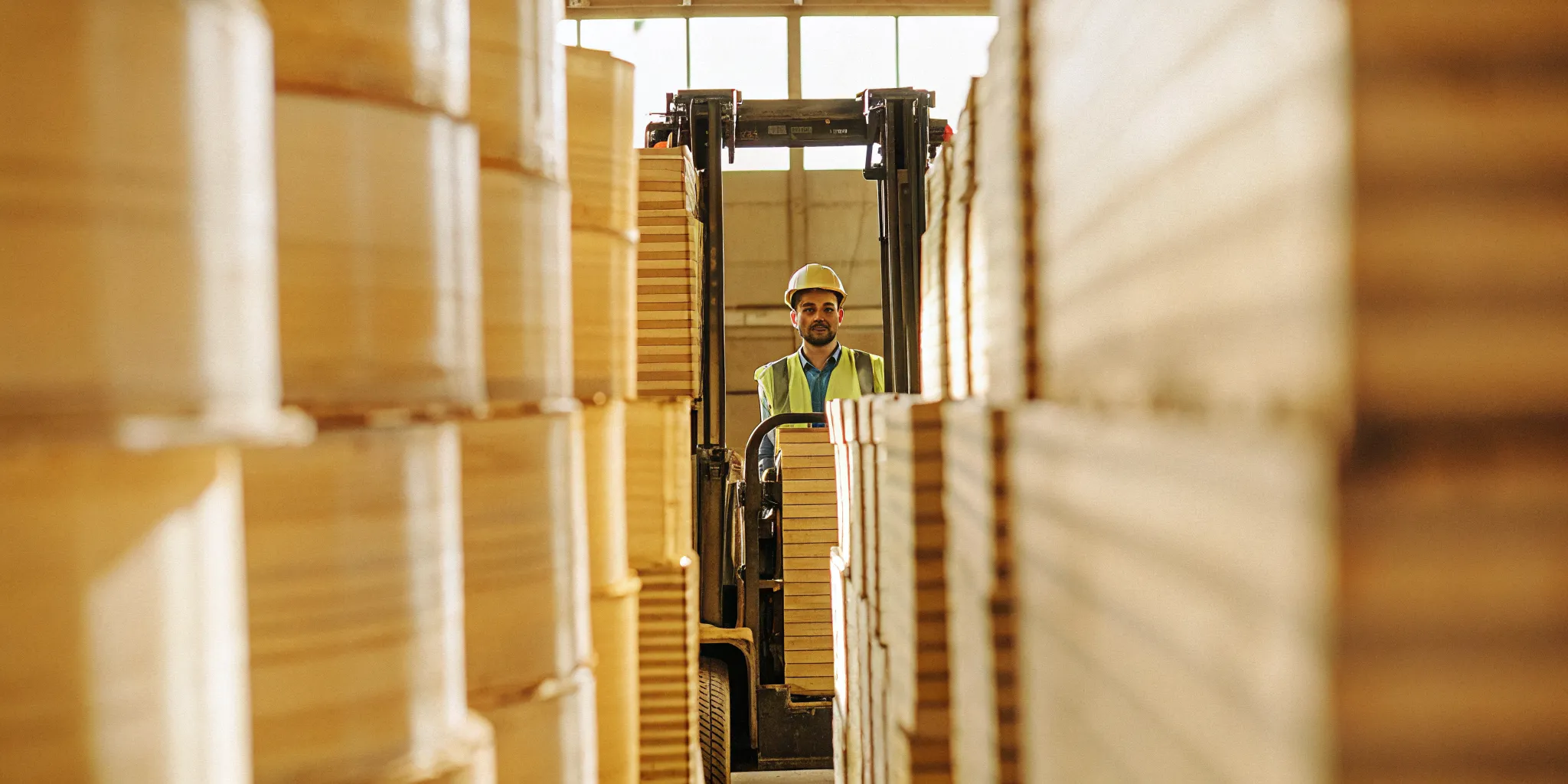 A licensed technician operating an indoor warehouse forklift safely under MA Class 1D guidelines.
The application process requires careful planning. OPSI typically requires approximately five weeks to process a hoisting license application. You can review all MA hoisting license classifications on our website to determine which license matches your career goals. Since this license is tied to you personally, it represents a valuable professional asset that enhances your employability across the state.
How They Differ
The fundamental difference lies in the issuing authority and the renewal cycle. OSHA certification is administered by your employer and renewed every three years. The MA Class 1D Hoisting License is issued by the state government and must be renewed every two years. Both credentials are required to operate legally on any Massachusetts commercial site. Utilizing our online MA 1D test prep program is the most effective way to master state regulations and pass the exam on your first attempt.
| Feature |
OSHA Forklift Card |
MA Class 1D Hoisting License |
| Regulatory Body |
Federal OSHA |
State of Massachusetts (OPSI) |
| Issuing Authority |
Employer / Private Trainer |
State Government |
| Evaluation Method |
Employer Practical & Written |
State-Administered Written Exam |
| Renewal Cycle |
Every 3 Years |
Every 2 Years |
| Geographic Validity |
All 50 States |
Massachusetts Only |
Maintaining active status for both credentials is essential for workplace compliance. The state written exam covers local safety laws, weight calculations, and legal restrictions that standard OSHA programs do not address. To learn more about our state-approved prep courses, call us at 508-212-4735. We provide the resources and expert guidance necessary to help you pass your exam on the first try.
When is a Class 1D License Required in Massachusetts?
In Massachusetts, operating any industrial forklift requires a valid state-issued hoisting license. This is a strict legal requirement enforced across all warehousing and manufacturing environments. Anyone operating heavy machinery must understand when and why this state permit is required.
Indoor forklift use rules
The state has established explicit rules regarding equipment operation. According to the MA guide to engineering restrictions, a Class 1D license is required to operate general industrial warehouse forklifts, reach trucks, and order pickers. These machines are commonly used in indoor distribution centers, manufacturing facilities, and retail stockrooms. Basic in-house safety training does not satisfy this requirement. You must hold a valid MA Class 1D Hoisting License issued by OPSI to operate these lifts legally.
The state implements these rules to verify that all operators are thoroughly trained in local safety guidelines and machinery limits. Holding this license demonstrates to employers and inspectors that you have successfully met the state's safety and regulatory standards.
Difference between state and federal laws
Understanding the intersection of state and federal guidelines is critical for compliance. While federal OSHA rules demand employer-sponsored safety training, Massachusetts law mandates a state-issued license. Operating a forklift in Massachusetts without this license is a direct violation of state law. This program is managed by OPSI to ensure consistent safety standards across the state. If you are unsure which classification applies to your equipment, consult the MA hoisting license classifications list for clarification.
Risks of working without a license
The Commonwealth of Massachusetts strictly enforces hoisting regulations. Operating a forklift without a valid state license carries severe consequences. Both operators and employers can face substantial monetary penalties. Unlicensed operation also creates a significant liability risk in the event of an accident, potentially leading to job loss, civil liability, or work-stoppage orders.
To mitigate these risks, professional operators rely on comprehensive study programs. Utilizing a high-quality online MA 1D test prep course is the most reliable way to prepare. To begin the application process, candidates must be at least 18 years old and submit the required medical documentation.
- A valid Class 1D license is mandatory for all indoor industrial forklift operations in Massachusetts.
- Federal OSHA training does not replace the requirement for a state-issued hoisting permit.
- Unlicensed operation exposes both workers and employers to severe fines and legal liabilities.
Steps to Obtain Your MA Class 1D Hoisting License
Obtaining your Massachusetts hoisting license is a structured process involving the OPSI and a written state exam. Most applicants can complete these steps within a few weeks. Below is a detailed guide on how to secure your Class 1D credential.
Check the basic rules
Before applying, you must meet the state's eligibility criteria. Applicants must be at least 18 years old and hold a valid, active driver's license from their home state. These are non-negotiable state hoisting rules established by the government. Once eligibility is confirmed, you can proceed to gather the necessary documentation.
Gather your papers
You must compile several critical documents for your application file. This includes a 2x2 color passport-style photo and a valid Department of Transportation (DOT) medical certificate. The DOT physical confirms you are medically fit to operate heavy machinery safely. You will also need to submit a $75 application fee to the state. These documents must accompany your official state application form.
Submit your application
All applications must be submitted directly to OPSI for review. This agency processes all hoisting credentials in Massachusetts. To ensure your application is successful, follow these structured steps:
- Verify that you are at least 18 years old and hold a valid driver's license.
- Schedule and pass a DOT physical to obtain your DOT medical card.
- Complete the OPSI hoisting license application and pay the $75 processing fee.
- Submit your completed application packet to OPSI and allow approximately five weeks for processing.
- Prepare for the state exam using comprehensive online MA 1D test prep resources.
- Attend your scheduled exam date and pass the written test.
Take the state exam
The written exam is the final milestone in the licensing process. It evaluates your knowledge of local regulations, weight distribution, and safe operating practices. Candidates must understand load limits, center of gravity calculations, and pre-operational safety inspections. Enrolling in a state-approved prep class is highly recommended to ensure success. Once issued, your hoisting license must be renewed every two years on your birthday. Renewal requires completing continuing education hours prior to expiration.
Class 1D Exam Preparation and Study Tips
Preparing for the OPSI Class 1D written exam requires a structured study plan. Candidates must master state laws, equipment physics, and safety regulations. The exam covers state statutes detailed in MGL c.146. Enrolling in a high-quality online MA 1D test prep course is the most efficient way to study.
Master state rules and laws
A significant portion of the exam focuses on Massachusetts hoisting regulations. Candidates must understand the role of OPSI in enforcing safety compliance. Under state rules, operators must be at least 18 years old. Ensure you can clearly explain the legal differences between federal OSHA standards and state-specific hoisting laws, as both are required for commercial operations in Massachusetts.
Learn hand signals and safety checks
Safety compliance is a primary focus of the OPSI exam. You must study standard hand signals used for communication on busy industrial sites. These signals allow operators to coordinate safely with spotters and pedestrians. Additionally, you must master the daily pre-operational safety check, inspecting tires, forks, hydraulic systems, and brakes. The exam will test your ability to identify equipment defects and execute proper corrective actions.
 Preparing for the state OPSI exam using self-paced online study materials.
Prep for the 1D forklift exam
The Class 1D exam is tailored specifically to indoor industrial warehouse forklifts. Key areas of focus include the stability triangle, load limits, and maneuvering in tight spaces. Understanding how load height affects equipment stability is critical. If you have questions about your hoisting license application or require study assistance, call us at 508-212-4735. Focused preparation is key to passing on your first attempt.
Massachusetts Hoisting License Classifications: A Quick Overview
The Massachusetts Office of Public Safety and Inspections (OPSI) administers the hoisting licensing system to maintain safe commercial work sites. These hoisting licenses are state-regulated and require operators to meet strict qualification standards. OPSI classifies hoisting equipment into four main categories based on machinery function and size.
Class 1 hoisting and Class 2 excavating
Class 1 covers machinery designed for lifting and hoisting. Within this category, the MA Class 1D Hoisting License is a critical requirement for warehouse personnel. As outlined in the official state guidelines, Class 1D specifically governs indoor industrial warehouse forklifts. Other Class 1 licenses include Class 1A for friction clutch machinery, Class 1B for telescoping booms with wire ropes, and Class 1C for hydraulic telescoping boom cranes.
Class 2 governs excavating and earthmoving machinery. A common type within this group is Class 2D. This license regulates compact hoisting machinery with a gross vehicle weight not exceeding 10,000 pounds, provided it does not fall under Class 1, 3, or 4 categories. Operators often utilize online training to prepare for these exams and learn the precise weight and classification restrictions.
Class 3 and Class 4 specialty licenses
Class 3 classifications apply to electric and pneumatic hoisting machinery. For example, Class 3A covers overhead gantry cranes, marine lifts, jib cranes without load charts, and electric or air-driven tugger hoists. These systems are common in manufacturing and shipping hubs. Operating this equipment without a valid license is a serious violation of state law.
Class 4 consists of specialty classifications for highly specific industrial applications. This class includes a diverse array of specialized machinery:
- Class 4B: Drill rigs and pile drivers, including crawler rock drills.
- Class 4D: Concrete pumps.
- Class 4E: Catch basin cleaning equipment.
- Class 4F: Sign hanging equipment for loads under 1,000 pounds.
- Class 4G: Specialty side boom mowers.
Each classification requires passing a state-administered written exam. To begin your preparation, you can find a training center or utilize self-paced online courses to study the specific regulations governing your equipment.
Related Articles
Frequently Asked Questions
How old must I be to apply for a MA hoisting license?
To apply for a hoisting license in Massachusetts, you must be at least 18 years old. Submit a completed application including a valid DOT medical certificate, and pass a state-administered written exam. The state mandate ensures that all operators can operate industrial machinery safely. You are legally prohibited from operating a forklift on a Massachusetts job site until you are of age and have passed the state examination.
How long does it take to get a Massachusetts Class 1D hoisting license?
The administrative process to obtain your state credential typically requires approximately five weeks. This period allows the Office of Public Safety and Inspections (OPSI) to review your application and verify your medical documentation. We highly recommend submitting your paperwork well in advance to prevent any service interruptions or employment gaps.
What happens if I operate a forklift without a MA hoisting license?
Operating a forklift without the proper state credential is a direct violation of Massachusetts state law. Both you and your employer could face substantial monetary penalties if OPSI inspectors discover unlicensed operation. Holding a valid state license is essential for maintaining safety compliance and securing employment in the warehousing sector.
Can I use an online course to prepare for the MA Class 1D exam?
Yes, you can use a state-approved online course to prepare for the MA Class 1D exam. Online training allows you to study at your own pace from home or on the job, covering crucial OPSI safety regulations, equipment stability, and exam topics.
Ready to get your MA Class 1D hoisting license?
Operating a forklift in Massachusetts without the correct hoisting license represents a significant liability risk that can result in substantial monetary penalties or immediate job termination. By starting your test preparation today, you can submit your application packet sooner and avoid costly employment gaps. Our state-approved online prep course is designed to cover all key exam regulations, ensuring you feel confident on test day.
Ready to get your license today? Call 508-212-4735 now to enroll in our self-paced online test prep program.
Tags: ,