Massachusetts 2B vs 2C Hoisting License Comparison
29
Jun
Choosing between a Massachusetts 2B vs 2C hoisting license starts with one practical question: will you operate a backhoe, or will your work be limited to front-end loaders and unloaders? The 2B classification covers backhoes and front-end loaders. The narrower 2C classification covers front-end loaders and unloaders. That difference can affect which jobs an operator may perform, how an employer assigns equipment, and which classification-specific training makes sense.
Call MA Hoisting License at 508-212-4735 to discuss your equipment and choose the training path that fits your work.
This guide explains the distinction in practical terms. It does not determine whether any individual is eligible for a license or replace current state guidance. Equipment definitions, application procedures, and training requirements can change. Before applying or assigning work, confirm the latest information with the Massachusetts Office of Public Safety and Inspections and review the state's hoisting licensing and exams guidance.
Reviewed by MA Hoisting License, a Massachusetts hoisting training provider.
Massachusetts 2B vs 2C hoisting license at a glance
The simplest distinction is the backhoe. A 2B license covers both backhoes and front-end loaders, while a 2C license focuses on front-end loaders and unloaders. If the work includes digging with a backhoe, 2C is not the appropriate classification for that task. You can also review the site's hoisting license classification overview before selecting preparation.
| Comparison point | 2B classification | 2C classification |
|---|
| Core equipment scope | Backhoes and front-end loaders | Front-end loaders and unloaders |
| Backhoe operation | Included within the classification scope | Not included |
| Typical decision driver | The operator needs to use both loader and backhoe functions | The operator's assigned work is limited to loader or unloader equipment |
| Training focus | Prepare for the 2B classification and its equipment scope | Prepare for the 2C classification and its narrower equipment scope |
| Best next step | Identify the exact machine and assigned tasks, then verify the classification against current Massachusetts guidance |
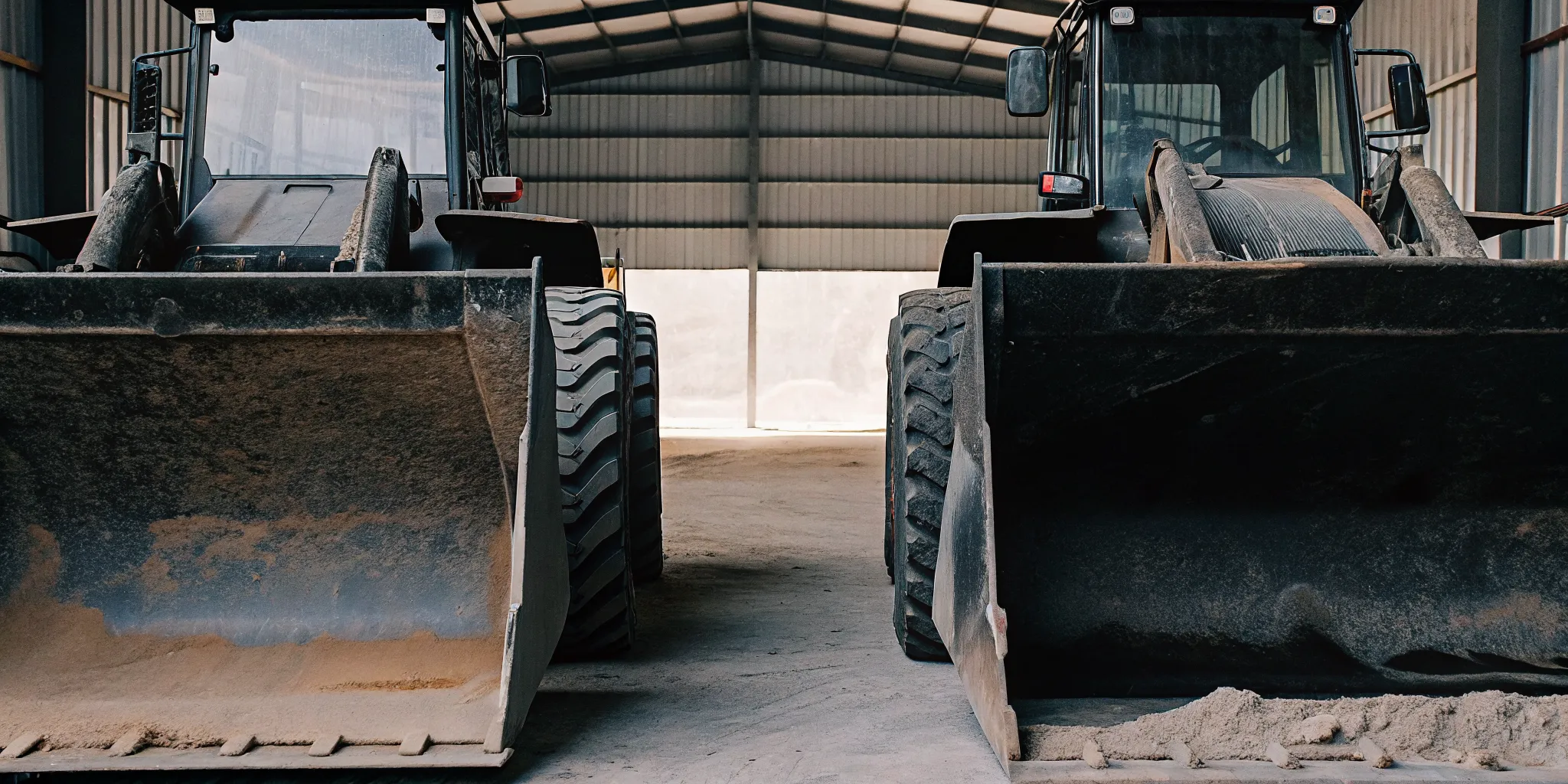 A backhoe's rear digging arm is the clearest visual distinction to check when comparing 2B and 2C scope.
Do not choose based only on what workers call a machine at the jobsite. Labels such as loader, tractor, backhoe loader, and unloader may be used inconsistently. Check the machine's manufacturer documentation, attachments, operating functions, and the work the operator will actually perform.
Massachusetts classifies hoisting licenses by equipment type and operating scope. A license is not a general permission to operate every type of heavy equipment. Operators and employers should understand each classification listed on the license and stay within that scope.
What equipment does a Massachusetts 2B license cover?
A Massachusetts 2B hoisting license covers backhoes and front-end loaders. It is commonly the relevant choice when an operator's assigned duties include excavating with a backhoe as well as moving, loading, or handling material with a front-end loader.
Why the backhoe function matters
A backhoe combines functions that can make a machine look similar to other equipment while changing the classification decision. Its rear digging assembly is designed for excavation. The front bucket may also perform loader work. Because 2B specifically includes backhoes, an operator who must use that digging function should not assume a 2C license is enough merely because the same machine also has a front loader bucket.
Consider a utility contractor whose operator loads gravel in the morning and excavates a trench later that day. The loader work alone may resemble 2C work, but the assigned backhoe excavation makes 2B the relevant classification to investigate. The classification should match the complete assignment, not just the most frequent task.
Common 2B work scenarios
- Excavating trenches or foundations with a backhoe.
- Using a backhoe loader for both digging and material movement.
- Loading aggregate, soil, or debris with a front-end loader.
- Performing varied site work where the operator may switch between loader and backhoe functions.
These examples help explain the scope, but they do not settle every equipment question. Machine configurations and assignments differ. Employers should document the exact equipment and seek clarification from the state when a machine does not fit the usual description.
Operators preparing for this classification can review MA Hoisting License's test preparation and application assistance. Select training that clearly identifies 2B rather than relying on a general heavy-equipment course.
What equipment does a Massachusetts 2C license cover?
A Massachusetts 2C hoisting license covers front-end loaders and unloaders. It is narrower than 2B because it does not include backhoes. The classification may fit an operator whose duties involve loader or unloader work without any assigned backhoe operation.
Typical 2C work
Front-end loaders are used to scoop, carry, load, and place materials. Depending on the worksite, an operator may move soil, aggregate, snow, or other material. Unloader work also falls within the 2C classification language. The exact machine and work should still be checked before an employer treats the assignment as 2C work.
For example, an employee assigned only to a front-end loader at a material yard may investigate 2C. If that employee is later expected to operate a backhoe, the employer must revisit the classification rather than assuming the existing 2C license extends to the new assignment.
The key 2C limitation
The most important limitation is straightforward: 2C does not include backhoes. Completing 2C training or holding a 2C license should not be treated as authorization for backhoe work. That remains true even when a worker has years of general equipment experience or when the machines share some controls and operating principles.
A narrower classification is not necessarily a poor choice. It can be the right match when the actual job is limited to loader or unloader operation. The goal is to select the classification that accurately matches present and reasonably anticipated duties.
How to choose between a 2B and 2C license
A good classification decision is based on equipment and assigned work, not guesswork. Use the following process before choosing training or submitting an application.
- List every machine the operator may use. Record the manufacturer, model, attachments, and core functions. Avoid broad entries such as heavy equipment or loader.
- List the assigned tasks. Separate loading, unloading, material movement, excavation, trenching, and other duties. A machine's use can be as important as its jobsite nickname.
- Identify any backhoe work. If the operator will use a backhoe, investigate 2B. Do not assume 2C covers that function.
- Plan for realistic future assignments. Employers should consider whether a worker will soon be expected to cover additional machines or duties. Choosing only for today's narrow assignment can create avoidable retraining or scheduling issues.
- Verify the classification with current state sources. Review Massachusetts licensing guidance and contact the appropriate state office when the equipment or task is unclear.
- Choose classification-specific preparation. Enroll in training and exam preparation that clearly matches the intended classification.
A practical question for operators
Ask your supervisor: "Will I ever be assigned to operate a backhoe?" If the answer is yes, that is a strong reason to investigate 2B rather than 2C. If the role is strictly limited to front-end loaders or unloaders, 2C may be the more focused option.
A practical question for employers
Ask: "What work will this employee perform during the busiest week, when coverage is limited?" The answer often reveals duties that are missing from a basic job description. Classification planning should reflect actual assignments, including occasional coverage work.
Neither question replaces a state determination. They help operators and employers gather the facts needed to ask the right question and select the right training path. For answers about documents and the training process, review MA Hoisting License's frequently asked questions.
Training implications for 2B and 2C applicants
Training should match the classification an applicant intends to pursue. A 2B applicant needs preparation aligned with backhoes and front-end loaders. A 2C applicant needs preparation aligned with front-end loaders and unloaders. Although the classifications overlap around loader work, they are not interchangeable.
Training is preparation, not the license itself
Completing a course does not by itself grant a Massachusetts hoisting license. Applicants must follow the current state application and examination process. MA Hoisting License can help students prepare and navigate application steps, but the state determines licensing outcomes.
Applicants should verify current eligibility rules, documents, fees, deadlines, education requirements, and exam procedures before relying on an older checklist. The state's requirements are the controlling source. Start with the official Massachusetts page, then use training support to prepare efficiently.
Choose a format that supports completion
MA Hoisting License offers practical training options for individual operators and employers. Depending on current availability and the course, options may include self-paced online study, instructor-led training, classroom locations, and on-site group training. Employers coordinating several operators can explore training at their location or review group training options.
Review test preparation and application assistance after confirming which classification matches your equipment.
The best format is one the applicant can complete while retaining the classification-specific material. A self-paced option can suit an experienced operator with an unpredictable schedule. Instructor-led training may be better for someone who wants direct explanations and structured review.
Plan beyond the first application
Licensing is not a one-time paperwork task. Operators and employers should track license classifications and renewal dates. They should also confirm current continuing-education obligations before renewal. MA Hoisting License provides continuing education information for operators planning their next renewal cycle.
What employers should check before assigning equipment
Employers have a practical role in preventing classification mismatches. Before assigning an operator to a machine, compare the worker's current license classifications with the exact equipment and task. Do not rely only on experience, a training certificate, or a verbal statement that two machines are basically the same.
Maintain an equipment-to-classification map
Create a simple internal list that identifies each machine by manufacturer and model, describes its functions, and records the classification your organization has verified for its operation. Review the list when the fleet changes or when attachments alter how a machine is used.
This document helps dispatchers, supervisors, and safety teams make consistent assignments. It also exposes unclear machines that need state clarification before work begins.
Keep operator records current
Maintain a record of each operator's license classifications and expiration date. Match that record against planned assignments before scheduling work. A worker who holds 2C should not be assigned backhoe duties based on availability or past experience.
Train for the assignment you expect
If a company expects an employee to operate both backhoes and front-end loaders, the training plan should reflect that scope. If an employee will only operate front-end loaders or unloaders, a focused 2C path may be appropriate. Group training can help employers align preparation across a team, but each operator still needs to follow the applicable state licensing process.
For unusual equipment, contact the Massachusetts Office of Public Safety and Inspections before making the assignment. A short clarification is safer than discovering a mismatch after work starts.
Common 2B and 2C classification mistakes to avoid
Choosing by machine nickname
Crews may use informal equipment names that do not precisely describe a machine's functions. Verify the model and assigned work instead of deciding from a nickname.
Assuming 2C includes backhoes
It does not. The basic distinction is that 2B covers backhoes and front-end loaders, while 2C covers front-end loaders and unloaders. When backhoe work enters the assignment, revisit the classification.
Treating course completion as licensure
Training helps an applicant prepare. The state issues the license after the applicant completes the applicable process. Employers should verify the actual license and classification before assigning equipment.
Relying on old requirements
Licensing rules, fees, forms, deadlines, and procedures can change. Use the current Massachusetts guidance rather than an old handout or a coworker's past experience.
Selecting only for today's task
A narrow classification can fit a narrow role, but assignments often evolve. Operators and employers should consider realistic future duties while avoiding unsupported assumptions about what a classification permits.
The safest approach is consistent: document the machine, document the work, verify the state classification, and choose training that matches it.
Frequently asked questions
What is the main difference between a Massachusetts 2B and 2C license?
A 2B license covers backhoes and front-end loaders. A 2C license covers front-end loaders and unloaders. The backhoe is the clearest practical difference between the classifications.
Can a 2C license holder operate a backhoe?
No. The 2C classification does not include backhoes. An operator who will perform backhoe work should investigate the 2B classification and confirm current requirements with Massachusetts.
Is 2B always better than 2C?
Not necessarily. The correct classification is the one that matches the operator's actual and anticipated work. For a role limited to front-end loaders or unloaders, 2C may be the focused choice. A role that includes backhoe operation points toward 2B.
Does completing a 2B or 2C course mean I am licensed?
No. A course prepares you for the applicable process. Applicants must meet current Massachusetts requirements and complete the state's licensing and examination steps.
Where can I confirm the current classification requirements?
Use the Massachusetts hoisting licensing and exams page and contact the Massachusetts Office of Public Safety and Inspections for questions about unusual equipment or assignments.
Choose the training path that fits your equipment
The right starting point is the work you need to perform. If that includes a backhoe, investigate 2B. If it is limited to front-end loaders or unloaders, investigate 2C. MA Hoisting License can help you choose the matching preparation option and understand the next steps without making assumptions about your eligibility.
Call 508-212-4735 to discuss the equipment you expect to operate and choose the right training option.
Tags: ,