On-Site Hoisting Training for MA Construction Companies
14
Aug
Sending your construction crew to off-site classrooms for licensing costs valuable hours in lost field productivity. Keeping operators compliant should not need to halt your active building projects.
Call 508-212-4735 to schedule on-site hoisting training.
On-site hoisting training allows Massachusetts construction firms to keep their equipment operators fully compliant with state regulations without losing valuable field time. Instead of sending workers to off-site classrooms one by one, you can bring state-approved courses directly to your jobsite. This approach easily meets the four-hour classroom training rules for renewing Class 1 and Class 2 hoisting licenses. Under Massachusetts state guidelines, these mobile training options ensure that every worker gets uniform, high-quality training. By scheduling mobile group training, companies can cut travel costs, save fuel, and minimize crew downtime. They can also tailor the lessons to match the specific machinery and equipment types their crews operate daily on the job.
How can you plan this training without disrupting your active schedule or overspending on travel fees? Understanding the practical benefits of this mobile approach shows how you can protect your bottom line. Below, we will look at Why On-Site Hoisting Training Makes Sense for Massachusetts Construction Companies, starting with direct savings and safety benefits. Here's how
Why On-Site Hoisting Training Makes Sense for Massachusetts Construction Companies
Running a busy construction crew in Massachusetts means meeting tight deadlines and strict safety rules. Keeping your heavy machine operators licensed is a must, but sending workers to off-site classes can stop your work. Choosing on-site hoisting training at your yard or jobsite helps you meet state standards without losing good work hours. It allows you to build a strong safety culture right where your team works each day.
Minimal crew downtime
The biggest hurdle for crew training is the loss of work hours. Sending your operators to off-site classrooms means paying for travel time and facing empty jobsites. Group on-site training ensures your entire team is compliant without the logistical burden and lost productivity of sending individuals to off-site classrooms. Teachers bring the lessons to your yard, so your crew can learn and then get straight back to work.
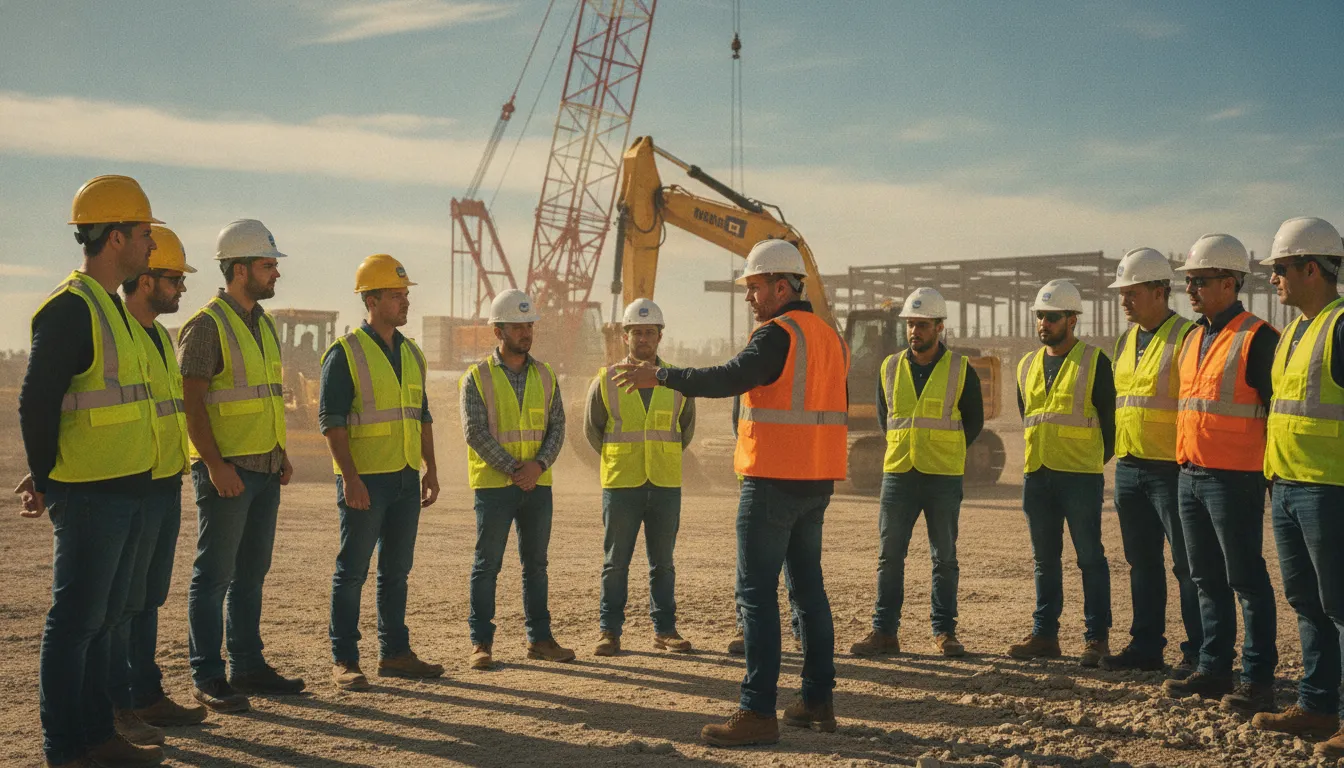
Bringing the course right to your business offers several clear perks for your daily work.
- Flexible planning: Plan training around your work shifts to keep jobs moving on time.
- No travel costs: Avoid paying for mileage or hotel stays for off-site classrooms.
- Total team coverage: Ensure all crew members are licensed and ready to work at the same time.
Lower costs for larger groups
Training workers one by one is slow and costs too much. Many local building firms need to train several operators at the same time to keep up with new jobs. Booking in-house training programs for five or more people lets you access special group rates. This bulk pricing lowers the cost per worker and makes safety compliance fit easily into your budget. We can also run classes in Spanish to ensure your entire team learns the material.
Custom lessons for your fleet
Each jobsite uses different gear, from forklifts to heavy excavators. Broad classes often teach plain safety rules that do not match the exact tools your crew uses. Training tailored to the actual equipment, makes, and models your team operates daily leads to safer habits and more relevant practical knowledge. Trainers can focus on your specific fleet, which helps operators work with more skill.
A clear path to compliance
Staying compliant with state law does not have to be a hard process. The state of Massachusetts has clear rules for offering an in-house hoisting training program to keep safety standards high. Teaming up with approved mobile trainers gives you a simple way to meet these rules. You get the needed class hours and proper papers to pass any state safety audit with ease.
How On-Site Hoisting Training Covers New Licenses, Renewals, and Equipment
On-site hoisting training provides a complete study plan designed for the real needs of your workforce. State law says that any company training program must follow strict state rules. It must cover the exact work rules, safety codes, and gear types your team uses on the job. This helps each worker learn safe habits while meeting state license laws.
State approved classroom topics
Any in-house program in Massachusetts must meet the standards set in 230 CMR 6.07(4). The state requires that training covers basic safety rules, hand signals, and how to run the machines while preventing jobsite hazards. You can read the state guide on offering an in-house hoisting training program to check these rules. This helps your course stay current with all state rules.
These core lessons help your operators learn both machine safety and daily maintenance. A standard class will cover key lessons such as:
- How to inspect hoisting machines before each shift.
- Standard hand signals and safe crew work rules.
- State laws and safe machine work on site.
This structured study covers all the key topics required for all Massachusetts hoisting license classifications. Operators learn about load limits, safe lifting steps, and proper hand signals. The classroom sessions use real-world cases to show how to avoid common mistakes on the job.
Customized equipment training
Standard classes often cover general rules, but on-site training focuses on the actual gear your team operates every day. Instructors can tailor the class to the exact makes and models on your jobsite. This approach helps your crew build safer habits and gain useful knowledge that fits their daily tasks. For fleets that run aerial equipment, see our MEWP and bucket truck training for additional certification options.
When training happens on your jobsite, teachers can use your own machines for walk-around checks. Operators get to practice the exact safety checks they must perform each day. This hands-on method makes the safety lessons much easier to understand and apply.
Exam prep and renewal hours
For workers who need a new license, the training prepares them for the written state exam. Massachusetts requires workers to pass this test with a score of at least 70 percent. You can read the state page on education requirements for hoisting engineer licenses to see the rules. Taking prep courses on your jobsite helps your crew feel ready for the test.
On-site classes also cover the renewal hours for current operators who need to renew. Operators holding a Class 1 or Class 2 license need four hours of approved training every two years. Bringing an instructor to your office is the easiest way to keep your entire crew compliant without any travel.
On-Site Hoisting Training vs. Classroom vs. Online: Weighing the Options
Massachusetts builders must keep crews safe and compliant with state laws. You have three main paths to get this training done. You can choose on-site mobile classes, off-site classrooms, or self-paced online courses. Each option has unique benefits for your team and your business.
Benefits of on-site crew training
On-site group training is often the most productive choice for busy contractors. A mobile unit brings state-approved instruction directly to your jobsite or shop. This setup helps you avoid travel costs and keeps your crew on the job.
Our team can also build custom on-site hoisting training in Massachusetts for your specific fleet. Tailoring classes to the exact machines your crew operates daily makes work safer. It also ensures that your operators gain highly practical skills for their everyday tasks.
Role of off-site classroom learning
Off-site classes are a great fit for one worker or small crews. This style removes workers from jobsite distractions so they can focus on their study. It works well when you only have one or two people who need to get licensed.
But sending workers to a physical class means more downtime. You must also plan for travel time and pay for fuel to get to the school. For larger groups, these costs and lost work hours can add up quickly.
Value of self-paced online courses
Online courses give the highest level of schedule flexibility. Operators can complete their coursework at night or during rain delays. This approach results in zero jobsite downtime.
But online learning does not offer hands-on instructor time or custom fleet tips. Still, Massachusetts lets companies run approved in-service training programs online or on-site to meet state goals. This gives you the freedom to choose the best path for your company's needs.
| Feature | On-Site Training | Off-Site Classroom | Online Courses |
|---|
| Downtime/lost productivity | None; fits around shifts. | High; needs travel time. | None; done on off-hours. |
| Best for group size | Crews of 5 or more. | One worker or small teams. | Any size; fits one person. |
| Customization to your equipment | High; uses your fleet. | None; standard lessons. | None; general lessons only. |
| Instructor interaction | Live instructor help. | Live classroom teacher. | None; self-study only. |
| Compliance documentation | Full records done for you. | Given when you finish. | Instant digital proof. |
How to Schedule On-Site Hoisting Training for Your Crew
Setting up group training at your jobsite does not have to be a slow or painful process. With the right planning, you can get your crew certified and back to work with low downtime. Bringing the classroom straight to your site helps keep your work on schedule and keeps your projects moving.
Preparation for team training
Before you make a call, you should gather some basic details about your operators. Knowing your exact needs will help you set up the best plan for your business. It also makes sure you do not pay for class hours that your crew does not need to renew. This first step makes the booking process fast and simple.
The step-by-step scheduling process
When you are ready to book, follow this clear checklist to arrange your training program:
- Tally your team needs. You should count how many operators need new licenses and how many need biennial renewal hours. Check which Massachusetts hoisting license classifications they use daily so you can choose the right training package.
- Contact an approved school. Get in touch with a state-approved training school to discuss your exact goals. You can call the direct scheduling line at 508-212-4735 to speak with us and get a custom quote.
- Check the training curriculum. Make sure the proposed class meets all state rules and hours under 230 CMR 6.07(4). The lessons must match your machines and fleet types so the safety training is clear, useful, and relates to daily tasks.
- Plan site details. Pick a date that works for your crew's shifts and set aside a safe classroom space at your jobsite. Having the trainer come to you keeps travel time to zero and avoids lost work hours on your projects.
- Run the class. Let the approved trainers handle the teaching on the scheduled day. Your operators will learn key state safety rules, study exam prep guides, and get ready to pass their written tests. Having a live trainer means they can ask questions and get instant feedback.
- Record the certificates. Collect the pass proof and training cards for each worker who finishes. Keep these papers in your company office files so you are fully prepared for any state compliance audits.
Compliance records and cost benefits
Business Owner Note: You can schedule group training for your entire crew right at your jobsite to minimize downtime and keep your projects moving.
By choosing an on-site hoisting training in Massachusetts program, your company gets a smooth path to regulatory compliance. It is a smart, low-stress way to manage your crew's licenses without sending them off to distant classrooms. This setup is highly cost-effective, as group rates apply for teams of five or more workers. It protects both your budget and your schedule.
What On-Site Hoisting Training Costs and Saves
Training a crew often strains your budget. When you send operators to an off-site classroom, you pay for course seats, travel miles, and lost work hours. By choosing on-site hoisting training in Massachusetts, companies often spend far less per worker. If you have five or more operators who need to train, group rates keep each worker's cost low.
How on-site training cuts travel costs
The total cost of crew training goes far beyond the class fee. Sending workers away from the jobsite means you lose work hours, pay for travel mileage, and halt daily tasks. When the teacher comes to your site, your crew can train on their normal shift. This local setup keeps your machines moving, avoids project delays, and keeps your work schedule on track.
How to save on license renewal fees
Massachusetts hoisting licenses do not last for life. Each of your drivers must renew their license every two years to stay on the job. To renew, they need state-approved continuing education to meet Massachusetts hoisting license training requirements. For Class 1A, 1B, 1C, and Class 2 licenses, workers need at least four classroom hours.
The state charges a $60 renewal fee per license according to mass.gov. If you run a business with many workers, these basic state fees quickly add up. An on-site class lets you cover the training for many licenses at one time. This group training ensures your entire crew stays compliant and active on a shared schedule.
Long-term safety and business savings
Investing in group training does far more than just save travel costs. This simple choice also builds a safer, better workplace for your crew. When a teacher works with your crew on-site, they use the exact machines your team operates daily. This tailored approach reduces safety mistakes and equipment damage on the job.
Fewer safety accidents mean lower insurance rates and less downtime for equipment repairs. In the long run, the savings from safer work far outweigh any training cost. Safe companies win more bids and keep their best workers on the job. Protecting your team with proper training is always a smart business move.
Here is a quick look at where your business saves:
- No travel pay or mileage costs for sending workers off-site.
- Lower rates through group training plans.
- Less equipment wear and tear through custom safety lessons.
- Zero lost project hours since training fits your exact work schedule.
How to Keep Your Crew Compliant Year After Year with On-Site Hoisting Training
Keeping a construction crew compliant needs careful planning. State rules are strict, and operators have different license end dates. If you manage a team, you know how hard it is to avoid work gaps.
A single lapse can halt a project or lead to major fines. With crew members on different gear, keeping everyone certified is a hard task. Many safety managers struggle to balance project deadlines with these strict training rules.
Understanding Continuing Education and Renewal Cycles
Massachusetts hoisting licenses renew every two years. Under 520 CMR 6.04, operators with Class 1A, 1B, 1C, or Class 2 licenses need at least four classroom hours of approved training. These hours only count from approved providers and cannot apply to more than one renewal.
You can start the renewal process 60 days before the license expires. State rules for renewing a hoisting license show that processing can take up to five weeks. Waiting too long to train your crew can cause costly jobsite delays.
To avoid these delays, managers must track all Massachusetts hoisting license training requirements. Keeping a master list of expiration dates helps you plan classes ahead of time. It also helps you group operators together for class.
Meeting State Standards for In-House Programs
Some companies want total control over their training. These businesses can apply to run their own program under in-house training rules. The state approval is valid for two years from the date it is issued.
To keep this approval, your course must meet the topics and hourly standards in 230 CMR 6.07(4). You must also use licensed instructors and keep detailed records of all completed classes. Setting up a program like this takes time, but it lets you set the rules.
For many contractors, the admin work of an in-house program is too heavy. You have to file forms, update course materials, and pass state audits. This is why most local companies prefer to hire a state-approved outside partner to handle the work.
Eliminating Scheduling Gaps in Your Workforce
If running your own program is too hard, on-site hoisting training is the best choice. A mobile training unit comes right to your yard or jobsite. This option keeps your full crew current without any gaps in their work schedules.
Instead of sending workers to different classes on different days, you can train everyone at once. This group training approach saves time and keeps your team on the job. It ensures that every operator remains compliant with minimal effort from your staff.
When an approved provider handles your training, you get the best of both worlds. You keep total control over the date and time of the class. At the same time, you do not have to deal with state paperwork or curriculum approvals.
Call 508-212-4735 to schedule on-site hoisting training for your crew today.
Frequently Asked Questions About On-Site Hoisting Training
Who approves hoisting training schools in Massachusetts?
The Office of Public Safety and Inspections (OPSI) approves hoisting training schools and continuing education programs in the state. To ensure your crew receives compliant training, you should work with a school that holds current state approval. You can check requirements and find answers on the Massachusetts hoisting license training requirements page. All courses must follow state regulations to keep your operators legally compliant.
Can a Massachusetts company run its own in-house hoisting training program?
Yes, local firms can get state approval to run their own in-house programs. According to mass.gov, the program approval remains valid for two years. Your business must submit an application and a curriculum that meets state hours and topics. To avoid this complex process, you can hire an approved school to bring mobile on-site hoisting training in Massachusetts directly to your job site.
How do I schedule on-site hoisting training in Massachusetts?
To schedule on-site training, you can contact an approved school to talk about your crew size and training needs. Instructors will work with your schedule to bring mobile training units directly to your workplace or job site. This on-site option is available for groups of five or more operators and covers all needed course materials. You can call the team at 508-212-4735 to plan a custom program for your team.
How much does hoisting license training cost in Massachusetts?
The cost of hoisting training varies based on the course format and the number of students. While single classroom test prep classes can start around $50, on-site group training often offers big cost savings per person. Group rates are available for teams of five or more operators. Bringing an instructor directly to your yard also cuts worker travel costs and prevents expensive project downtime.
Ready to schedule on-site hoisting training for your crew?
Putting off safety training can lead to costly state fines, project delays, and worker downtime on your busy jobsite. Without approved classes, your operators cannot run heavy excavation machinery legally, which stalls your progress and hurts your company's bottom line. Bringing our state-approved on-site hoisting training in Massachusetts directly to your yard keeps your crew working safely without any lost travel time. We can set up these custom classes around your active work shifts so you can secure your compliance before your next big construction job begins. Our skilled instructors handle all of the paperwork to make the process simple for you.
Call (508) 212-4735 to schedule on-site hoisting training today.
Tags: ,